

Publicité
[Blog] Penalty Point System : A Necessary Step, Not a Standalone Solution
 Par
Guest .
Par
Guest .
Publié le:
11 janvier 2026 à 13:00





 Par
Guest .
Par
Guest .
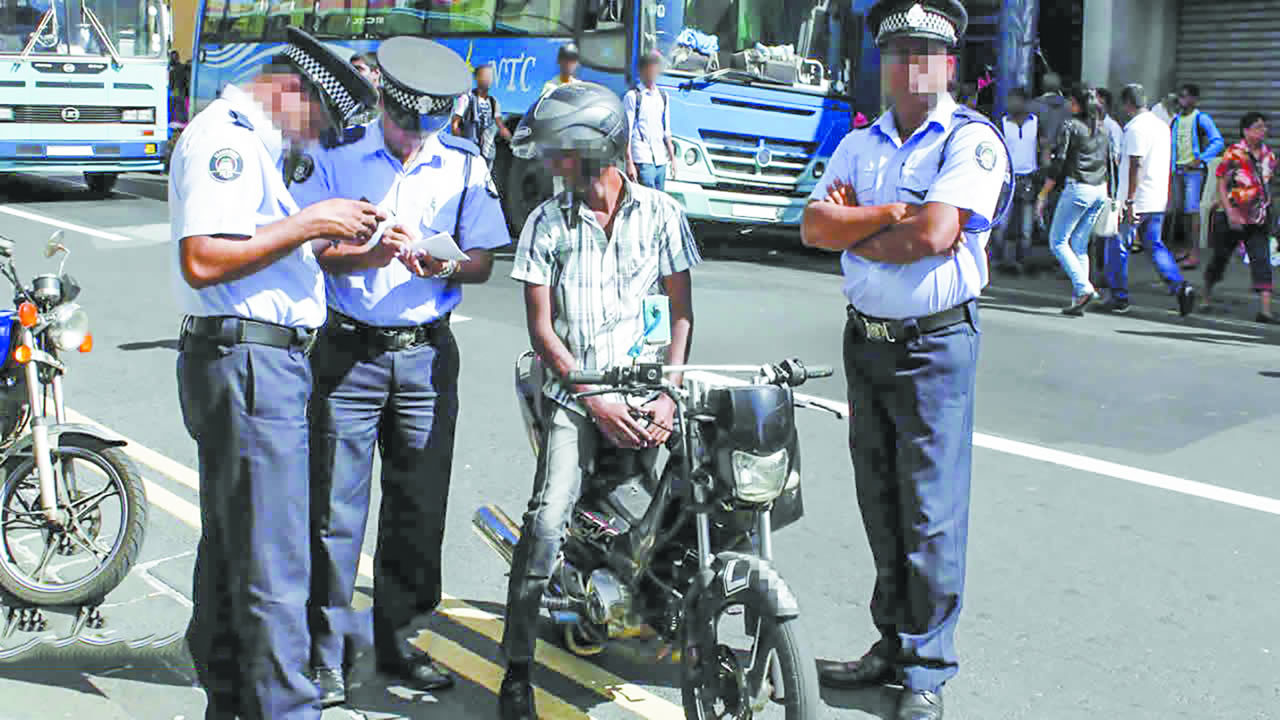
The penalty point system is a very effective tool which aims at:
Although almost all countries with good road safety indicators have adopted the penalty point system, all countries with the demerit point control do not necessarily display good road safety scores.
The reason behind is that the penalty point system, though being an excellent tool, is not the only criteria which contributes to avoid road traffic accidents.
Moreover, its efficiency and effectiveness depend on the environment in which it operates.
Let us take the case of Malaysia and Kenya. Both countries have penalty point system since 1997 and 2019 respectively. Yet, they both are struggling with high fatality rates.
18 persons die on Malaysian road everyday 70% of whom are motocyclists. This south east Asian country has an average fatality rate of 23 per 100,000 inhabitants -last 5 years.
Kenya has a fatality rate of 27.8 per 100,000 inhabitants. This is due to the fact that 50% of its motor vehicle fleet consists of two wheelers. Inappropriate state of infrastructure, corruption, insufficient road safety sensitization are also blamed amongst others.
Hence, this shows that the penalty point is not a magic stick.
To mention but 3 aspects, countries mentioned above have the following weakness:
These shortcomings drown the good intentions of the penalty point system although situation could have been worse had PPS not been introduced.
In Mauritius, the nature of our fleet consisting of 36% powered two wheelers is a weak link that needs to be stressed upon and considered in all major road safety strategy. Riders and pillion riders’ fatalities have reached an average of more than 45% in the pool of road deaths. There are no countries in the world displaying such a high use of two wheelers which display a fatality rate below 10 per 100,000 inhabitants. In Singapore, 15% of the fleet are PTW and 60% of road victims are riders and pillion riders. In Switzerland two wheelers account for 3% total vehicle kilometres travelled, yet motorcyclists consists of 20% road deaths.
I am afraid that it might be very challenging for the PPS to control serious and fatal road accidents should the PTW fleet keeps on growing and more importantly should the total vehicle kilometres travelled by two wheelers increase. One of the solutions may be to propose alternative means of transport for riders for their regular commuting.
Secondly, it would be advisable for our infrastructures, road markings, road furniture be revamped wherever necessary to welcome the PPS. Then, a rigorous process for regular maintenance would be desirable. We need to be honest our road facilities are often inadequate and poorly maintained. Hence, they not only guide, inform, indicate and warn but they also inspire trust and respect.
Thirdly we have a very poor road safety culture in Mauritius and this is degrading year after year. More than 300,000 road traffic contraventions have been recorded last year by police, this is very serious. Enforcement does control behaviour but education is also a significant pillar.
It would be advisable that a calendar be established for continuous sensitisation on media including social media as this is a user friendly, interactive, cost worthy and practical way of reaching out for road users. Speeding is a major threat in Mauritius, yet there hasn’t been a large-scale campaign against it since more than a decade. 75% casualty accidents occur whilst overtaking, yet there has never been a campaign on safe overtaking.
While I am referring to sensitization I would like to suggest once more to give more consideration to the Respe.mu website (TMRSU) and its peripheral social media network. I am convinced that this will contribute to the ecosystem needed for the success of penalty point system.
By Alain Jeannot
President of NGO Prévention Routière Avant Tout (PRAT)
President of National Road Safety Council
 J'aime


