
Publicité
Publicité






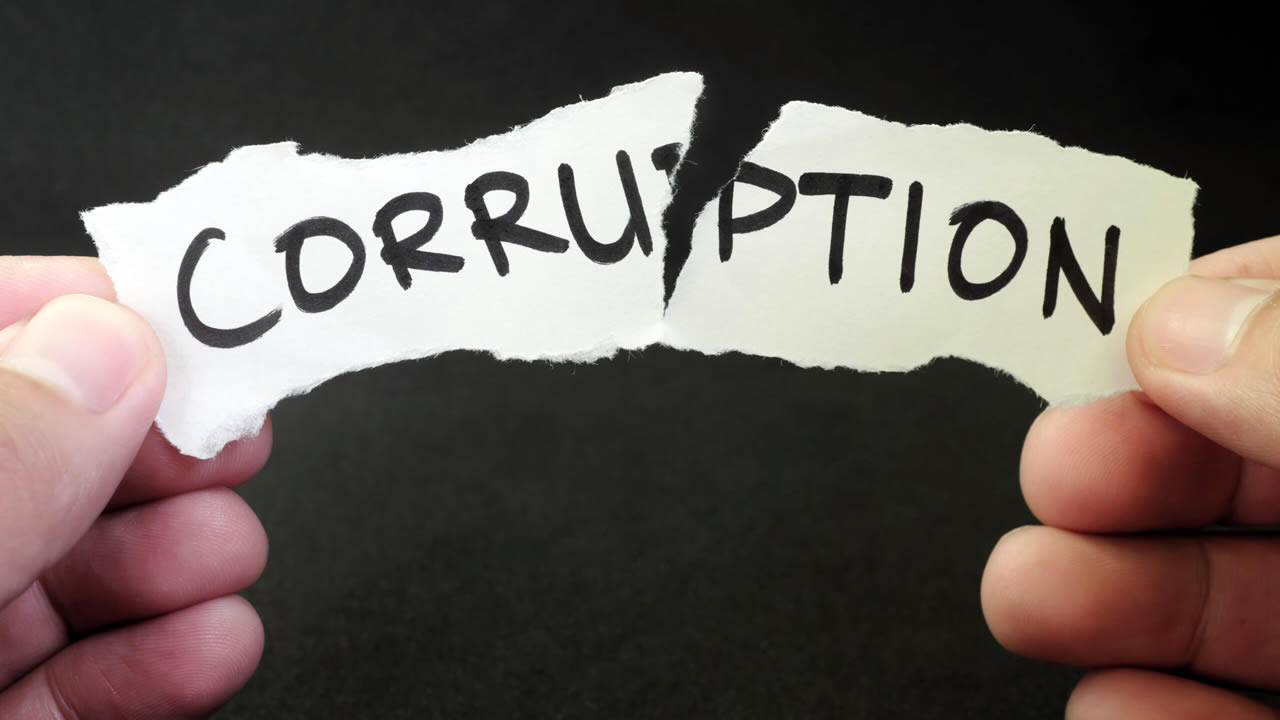
Transparency International has just released its 2025 Corruption Perceptions Index, highlighting global corruption levels, trends, and the impact of governance on public sector integrity across 182 countries. To recall, the Corruption Perceptions Index (CPI) of Transparency International (TI) represents the most popular proxy for measuring corruption worldwide. The CPI ranks 182 countries and territories worldwide by their perceived levels of public sector corruption. The results are given on a scale of 0 (highly corrupt) to 100 (very clean).
Where does Mauritius stand in the CPI 2025? Mauritius scored 48 points out of 100 on the 2025 Corruption Perceptions Index and now occupies the 61st position worldwide, representing a decline of 3 points in terms of score and losing 5 places in terms of rank compared to 2024. This is the lowest score since 2012, when Mauritius scored 57 points and ranked 43rd globally.
In an article which appeared in Le Défi Quotidien of 9 December 2025, I sounded the alarm and argued that Mauritius is unfortunately not taking the bull by its horns when it comes to the fight against corruption. Today, the evidence clearly demonstrates that Mauritius is on a slippery slope, paying lip service to fancy plans and attractive promises.
While Mauritius’ scores and rankings have been worsening over the years, some of our neighbours have been making tremendous progress in the fight against corruption. Two examples would suffice. Seychelles, which scored 55 points in 2012 (compared to Mauritius’ 57), has now been credited with 68 points (compared to Mauritius’ 48). On the other hand, Cabo Verde is presently occupying the 35th position with a score of 62. It occupied the 39th position in 2012 with a score of 60.
Thus, Seychelles occupies the 1st position in Africa as the least corrupt country. In fact, Seychelles has kept a strong upward trajectory since 2021, making it Africa’s cleanest performer. On the other hand, Cabo Verde, as the second least corrupt country, is also consolidating its position as a regional leader.
On the African continent, Mauritius is maintaining the 5th position behind Seychelles, Cabo Verde, Botswana, and Rwanda. For years Mauritius used to be the 2nd least corrupt country in Africa, behind Botswana, and its governance track record was universally recognized. How do we explain Mauritius’ gradual decline?
Transparency International views Mauritius’ 2025 CPI decline as a serious warning sign. The decline in Mauritius’ CPI scores over the years reflects deeper governance challenges rather than short-term economic or political issues. The main drivers of the decline are:
Institutions meant to provide oversight — the judiciary, parliament, and independent commissions — are perceived as less effective and increasingly politicized.
NGOs, journalists, and watchdogs face mounting restrictions, reducing their ability to hold the government accountable.
Citizens report growing skepticism about fairness in public procurement, political financing, and access to justice.
Allegations around the misuse of public funds, opaque contracts, and lack of accountability in state-owned enterprises have damaged credibility.
TI notes that anti-government protests worldwide, including in countries like Mauritius, show that citizens are “fed up with unaccountable leadership” and demand reform.
Lack of serious remedial actions on the part of the authorities.
The decline in Mauritius’ CPI scores over the years reflects deeper governance challenges rather than short-term economic or political issues.
The Government has announced the setting up of a National Crimes Agency based on the UK model to improve overall governance and the fight against corruption. Will it be the panacea to all our ills? Empirical evidence and experience have shown that a mere change in structure or legislation will not solve the problem. It resembles more a repackaging or the filling of the same old wine in new bottles. Before such an organization reaches its momentum, irreversible harm might have already been done to the country’s economy and society.
If the government is really committed to improving overall governance and the fight against corruption in Mauritius, it will have to demonstrate strong political will and set the right examples, be it in terms of public procurement, recruitment, promotion, or nominations. The example of Singapore might be very fitting here – how it started in the 1950s as an island battling systemic corruption and became one of the least corrupt countries in the world today (CPI rank 3rd with a score of 84 out of 100). Mere flowery discourses or utopian roadmaps will not solve the problem or achieve sustainable results.
The public will surely recall the enactment of a rather recent piece of legislation – the Financial Crimes Commission Act 2023 (proclaimed on 29 March 2024) in Mauritius. The FCC Act provides for the establishment of the Financial Crimes Commission as the apex agency in Mauritius to detect, investigate, and prosecute financial crimes and any other ancillary offence connected thereto. In terms of investigation, there is no doubt that the FCC is doing a marvelous job. Thus, instead of devoting enormous human and material resources to the setting up of a new agency supposedly to solve all our problems, it would be wiser to review the existing legal and institutional framework and bring about amendments wherever necessary.
While in Mauritius, we are grappling with announcements, new legislative frameworks, new structures, nominations, and implementation modalities, our neighbours and competitors are making genuine and concerted efforts to tackle corruption and financial crimes and achieve genuine economic and social development in their respective countries.
Will Mauritius be able to take the bull by its horns and reverse the downward trend or buy time by making ornamental promises and allow corrupters and the corrupt to thrive peacefully? Time alone will tell!
The table below depicts the CPI scores and rank for Mauritius over the years.
| Year | No of Countries | Rank of Mauritius | CPI Score |
| 2007 | 180 | 53 | 4.7 |
| 2008 | 180 | 41 | 5.5 |
| 2009 | 180 | 42 | 5.4 |
| 2010 | 178 | 39 | 5.4 |
| 2011 | 183 | 46 | 5.1 |
| 2012 | 176 | 43 | 57 |
| 2013 | 177 | 52 | 52 |
| 2014 | 175 | 47 | 54 |
| 2015 | 168 | 45 | 53 |
| 2016 | 176 | 50 | 54 |
| 2017 | 180 | 54 | 50 |
| 2018 | 180 | 56 | 51 |
| 2019 | 180 | 56 | 52 |
| 2020 | 180 | 52 | 53 |
| 2021 | 180 | 49 | 54 |
| 2022 | 180 | 57 | 50 |
| 2023 | 180 | 55 | 51 |
| 2024 | 180 | 56 | 51 |
| 2025 | 182 | 61 | 48 |
Lalldeo Boodhoo
Former Assistant Director, Financial Crimes Commission
 J'aime