
Publicité
Filipino Expats in Mauritius : Preserving Roots, Embracing New Horizons
 Par
Jameela Jaddoo
Par
Jameela Jaddoo
Publié le:
6 July 2026 à 13:57





 Par
Jameela Jaddoo
Par
Jameela Jaddoo
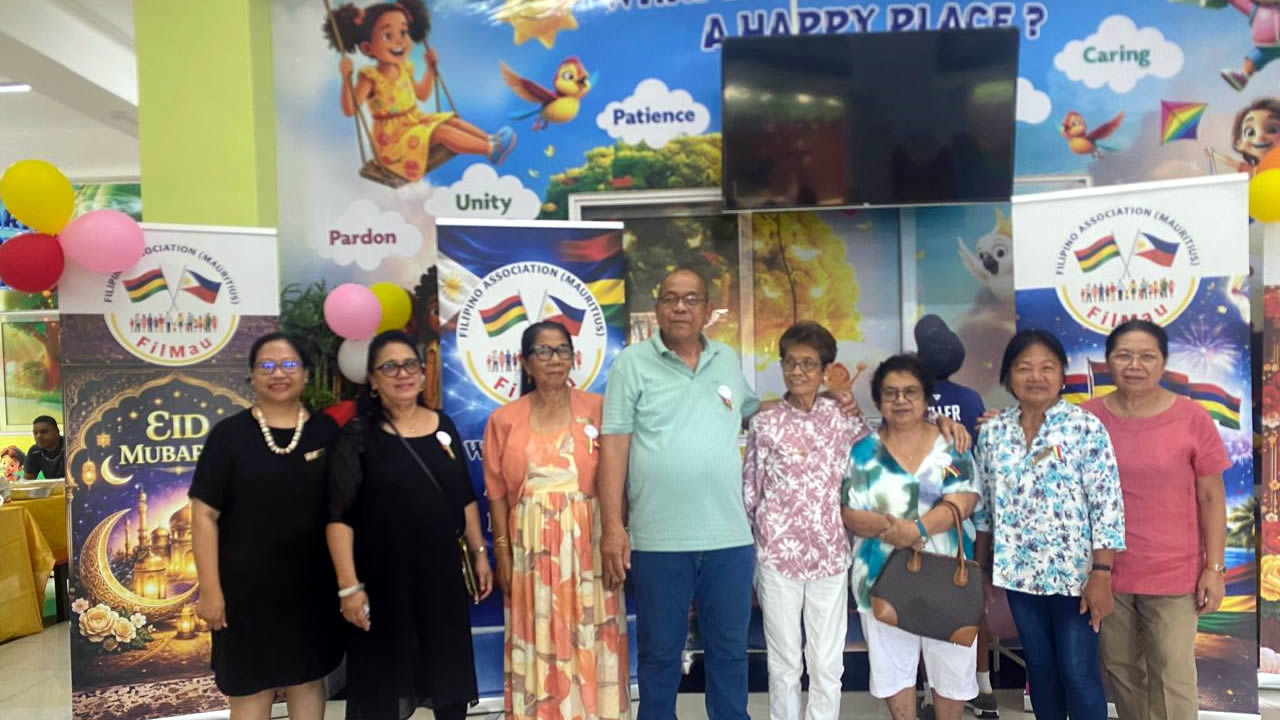
Thousands of kilometres away from their homeland, Filipinos in Mauritius have built lives, careers and families while remaining deeply connected to their roots. From healthcare and education to tourism and community leadership, they are contributing to Mauritian society while preserving the traditions, values and spirit that define their identity. Through their stories, they share how Mauritius became a second home without ever replacing the first.
For Esmeralda Lee Yau, Mauritius is more than just a place of residence. It is the island where she built a family, pursued her professional ambitions, and found a second home while remaining deeply connected to her Filipino roots.
Originally from Manila, Philippines, Esmeralda moved to Mauritius after marrying a Mauritian. Today, she is the founder and director of Early Years Pre-Primary and Primary School, a mother of three, and the newly elected President of the Filipino Association (Mauritius). Over the years, she has become a respected figure within both the Filipino and Mauritian communities.
“I came to Mauritius because of love and family, and over the years, Mauritius has truly become my second home. I am grateful to be part of both the Filipino and Mauritian communities,” she says.
Her achievements have also earned international recognition. In 2023, she received the Global Naari Samman Award in the category of Best Woman Achiever – Business Woman Entrepreneurship Award, an accolade organised by the WEICI India Foundation in association with Mouvement Solidarité Féminin Mauritius.
Today, however, one of her proudest roles is leading the Filipino community on the island.
“I feel truly honoured and grateful for the trust that the Filipino community has placed in me,” she says of her recent election as President of the Filipino Association (Mauritius). “Being elected as President is both a privilege and a great responsibility.”
She sees the association as much more than a cultural organisation. For many Filipinos living thousands of kilometres away from home, it serves as a support network and an extended family.
“The Filipino Association aims to bring Filipinos together, promote our culture, and support the well-being of our community,” she explains.
The association organises cultural and social events, family gatherings, sports activities and community outreach initiatives.
It also provides guidance to newly arrived Filipinos, helping them navigate life on the island while connecting them with fellow members of the community.
“Living far away from our homeland and loved ones is never easy, and many Filipinos experience homesickness, especially when they first arrive in Mauritius,” says Esmeralda. “We want every Filipino to feel welcomed, connected, and part of one family. We want them to know that they are not alone; we are here to support one another.”
Beyond preserving Filipino traditions, the association also seeks to strengthen ties with the wider Mauritian society. Through volunteer work, charitable activities and collaboration with local organisations and the Philippine Embassy, members actively contribute to the communities in which they live. “We aim to build a caring, united, and active Filipino community that contributes positively to Mauritian society,” utters the Filipino expat.
One recent example was the celebration of the 128th Philippine Independence Day, held on Sunday 14th June in Mauritius. The event brought together Filipino and Mauritian families and friends in a vibrant atmosphere.
“It was a joyful and meaningful gathering filled with unity, cultural pride, and friendship. The event brought our community together to honour the history and freedom of the Philippines through cultural performances, traditional food, music, and shared moments of celebration,” recalls Esmeralda.
For the president of the Filipino Association (Mauritius), such events play an important role in maintaining cultural identity while fostering integration. “It was also a wonderful opportunity to strengthen the bond between Filipinos and Mauritians, as we celebrated side by side in a spirit of respect, joy, and togetherness.”
Although relatively small in number, the Filipino community in Mauritius is highly active and diverse. Filipinos contribute to a wide range of sectors including education, hospitality, tourism, healthcare, business process outsourcing and other professional services.
Through her leadership, Esmeralda hopes to continue strengthening this close-knit community while ensuring that every Filipino living in Mauritius feels valued and connected.
“I look forward to working together with my fellow Filipino “Kababayan” to strengthen our community, support one another, and promote Filipino culture here in Mauritius. I hope to serve with dedication, integrity, and compassion.”
And underlines: “Above all, we aim to build a caring, united and active Filipino community that contributes positively to Mauritian society.”
For Victoria Auckburally, Mauritius is no longer simply the country where she settled after marriage—it is the place where she has built a family, forged a life, and created a home away from her native Philippines.
Born in the Philippines in 1959, Victoria arrived in Mauritius 38 years ago. “I came to Mauritius in 1988 after getting married. At that time, my decision to settle here was mainly based on starting a new life with my husband.”
Nearly four decades later, she looks back on a journey marked by adaptation, resilience, and cultural exchange. Today, she works as a part-time translator and considers herself deeply rooted in both her Filipino heritage and Mauritian society.
“Over time, as I built my family and adjusted to the environment, Mauritius became my home. It was not just a decision, but a natural transition as I created a life and future here,” she utters.
Arriving in Mauritius for the first time was a striking experience. Compared to the bustling pace of life in the Philippines, the island offered a completely different atmosphere.
“When I first arrived, I found Mauritius to be very peaceful and beautiful, with its beaches and greenery. It felt very different from the Philippines, especially in terms of size and pace of life—it was much quieter and slower,” she explains.
Over the years, however, what initially seemed unfamiliar became a source of comfort and belonging. Victoria says one of the aspects she has come to appreciate most is Mauritius’ multicultural character and the harmonious coexistence of its diverse communities. “What once felt unfamiliar has now become home, and I feel deeply connected to the island,” she says.
Like many expatriates, her journey was not without challenges. “One of the biggest challenges I faced was the language barrier, especially with Creole and French, which were new to me. Another challenge was being far away from my family in the Philippines,” she shares.
Being separated from her family in the Philippines was another emotional hurdle. Yet through determination she gradually found her footing. “I overcame these difficulties by gradually learning the local language, adapting to the culture, and building relationships with people around me. Staying in contact with my family also helped me.”
Despite the geographical distance from her homeland, Victoria quickly discovered many similarities between Mauritian and Filipino culture. “I have embraced the strong sense of family, hospitality, and community spirit in Mauritian culture. These values are very similar to Filipino culture,” she says.
According to her, both societies place great importance on family and celebrating life’s important moments together. “Both Mauritians and Filipinos are warm, welcoming, and place great importance on family gatherings, respect for elders, and celebrations. These similarities made it easier for me to integrate and feel accepted,” she confides.
While embracing Mauritian culture, Victoria has also remained committed to preserving her Filipino identity. “I preserve my Filipino identity through food, traditions, and values. I continue to cook Filipino dishes and share them with my family. I also maintain my language when speaking with fellow Filipinos.”
She also makes a conscious effort to maintain Filipino customs and celebrate important occasions like Christmas, new year and Independence Day in the Filipino way. “I also hold on to Filipino values such as close family ties, respect, and strong faith, which remain a big part of my life,” she adds.
Throughout her journey, the Filipino community in Mauritius has also been a valuable source of support and companionship. Being surrounded by fellow Filipinos helped ease feelings of homesickness and strengthened her sense of belonging. “The Filipino community has played an important role in making me feel at home, especially in the earlier years,” she tells.
Through community gatherings, friendships and shared traditions, Victoria found comfort in connecting with people who understood her experiences and cultural background.
“Being able to connect with people who share the same background, language, and traditions provided comfort and support. The community helped reduce the feeling of being far from home and made it easier to adjust to life in Mauritius.”
Having travelled extensively and worked with people from different cultures around the world, Raymond Lina thought he had seen it all. Yet when the Filipino travel consultant first arrived in Mauritius in 2015, the island left an impression that few destinations had managed to achieve.
Originally from the Philippines, Raymond, 47, currently works as a travel consultant. His move to Mauritius came about through a professional opportunity.
“I came from our partner company in Manila. They needed staff in Mauritius and I became interested in the opportunity, so I requested to move here,” he explains.
What initially began as a career move soon turned into something much more personal. “To tell you the truth, I fell in love with the island the first time my Filipino colleagues drove me around. It seemed so peaceful and beautiful,” he recalls.
For Raymond, Mauritius offered a refreshing contrast to the fast-paced environments he had previously experienced. The island’s scenic landscapes, lush greenery and tranquil coastline quickly won him over. ““For me, this is an ideal place where you can leave behind your worries,” he utters.
As a travel professional who has visited numerous countries, Raymond believes Mauritius possesses a unique charm that goes beyond its natural beauty.
“My first impression of Mauritius was how naturally welcoming and peaceful it felt,” he says. “I’ve seen many destinations, but Mauritius had a unique blend of multicultural harmony and simplicity that stood out.”
More than a decade later, those first impressions have only strengthened. What once felt like a temporary work assignment gradually became a place where he could envision a future.
“I learned to appreciate the balance between work and personal life, the respect among different communities, and the island’s steady, grounded lifestyle,” he utters. “Mauritius stopped feeling like just a work assignment and slowly became a place where I felt genuinely at home.”
Like many expatriates, however, Raymond had to navigate his share of challenges. While his experience in the travel industry had exposed him to different cultures, building a life abroad required a different kind of adjustment.
“The administrative processes were new to me, and settling into a slower pace after coming from fast-moving environments required patience. I also had to adjust to being far from family — this time not as a traveller, but as someone building a life abroad,” he confides.
He credits his successful integration to an open mindset. “I overcame these challenges by staying open‑minded, asking questions, and leaning on both Mauritian colleagues and the Filipino community. My background in travel helped me stay adaptable, and over time I found my rhythm and support system here.”
One of the aspects he appreciates most about Mauritius is the strong sense of community, something that resonates deeply with Filipino values. “Mauritians have a warmth that feels very familiar to us Filipinos,” he says.
According to Raymond, both cultures share a love for family, hospitality and togetherness. “We love celebrations, we love feeding people, and we make visitors feel at home. Those similarities made it easy for me to integrate.”
Despite living thousands of kilometres from the Philippines, Raymond remains strongly connected to his roots. Food, language, music and faith continue to play an important role in his daily life. “I cook Filipino dishes, celebrate our holidays, and speak Tagalog whenever I can,” he shares.
Music, in particular, remains a cherished part of Filipino culture. “Every gathering is not complete without the microphone and the karaoke,” he laughs.
The Filipino community also comes together to celebrate major occasions such as Independence Day, Christmas, New Year and Holy Week. Religious traditions remain strong, with Filipino Mass held every second Sunday of the month.
For Raymond, the Filipino community has been instrumental in helping him feel at home on the island.
“Even with my global experience, nothing compares to being around people who understand your humour, your language and your values,” he says. “It’s like having a piece of home right here on the island.”
Looking back on his journey, Raymond believes Mauritius has taught him valuable life lessons. “Living in Mauritius has taught me patience, balance, and appreciation for a slower, more meaningful pace of life,” he reflects.
His message to fellow Filipinos considering a move to Mauritius is simple: be patient and embrace the experience.
“Mauritius is a beautiful, peaceful place with warm people. There will be challenges, but with our natural resilience and adaptability, you will find your place here and build a life you can be proud of.”
For Marylou Arnilla, Mauritius was initially a destination of opportunity. Nine years later, it has become a place she proudly calls home.
Originally from the Philippines, the 57-year-old optometrist arrived in Mauritius in 2017. Like many Overseas Filipino Workers (OFWs), her decision to move abroad was driven by a desire for professional growth and a commitment to supporting her family back home.
“I made the decision to settle in Mauritius when my company offered me an opportunity to work as an optometrist,” she explains. “My primary motivations were professional growth and the ability to provide financial support for my family.”
Mauritius also appealed to her for its peaceful environment, stable healthcare sector and growing demand for eye care professionals. What began as a career move gradually evolved into something much more meaningful. “Over the years, it became more than just work—it became home,” she utters.
A nature lover at heart, Marylou was immediately captivated by the island’s landscapes when she first arrived. “My first impressions of Mauritius centred on its natural beauty, its awe-inspiring mountain views, stunning beaches and very welcoming people, especially my local workmates,” she recalls.
She was equally impressed by the country’s multicultural character and the harmonious way in which different communities coexist. “I saw Mauritius as a safe and harmonious place where different cultures live together,” she says.
Today, the beaches and natural scenery that once felt like tourist attractions have become part of her everyday life. She has also embraced what she describes as the island’s relaxed pace and “island-time” lifestyle.
However, adapting to life in Mauritius was not without its challenges. “The biggest challenges were homesickness, adjusting to a new work environment and language barrier especially communicating older patients who spoke only Creole and French. I also missed Filipino foods and family gatherings a lot.”
To overcome these obstacles, she relied on regular video calls with loved ones, support from the Filipino community, and a willingness to learn.
“Professionally, I learned the local optometry protocols and asked colleagues for guidance. For the language, I picked up basic Creole and French phrases to communicate better with patients,” she explains. “Patience and staying open-minded helped a lot.”
Over the years, Marylou has also discovered many similarities between Mauritian and Filipino culture. Family values, hospitality and respect for elders are among the qualities she most admires.
“I’ve embraced the Mauritian love for family gatherings, their respect for elders, religious diversity and their variety of food, especially local street food like ‘gâteau piment’ and ‘dholl puri’,” she says. According to her, both societies share a strong emphasis on family and community. “Both Mauritians and Filipinos are very family-oriented and hospitable,” she notes.
Despite spending nearly a decade abroad, Marylou remains deeply connected to her Filipino roots. “I cook adobo, lumpia, sinigang and pancit to get a taste of home. I also speak Tagalog and Bisaya with family members and fellow Filipinos here.” In addition, community celebrations, she underlines provide opportunities to observe traditional holidays and customs.
Indeed, for Marylou, the Filipino community has also been a crucial support system throughout her journey. “When I arrived nine years ago, other Kaba-bayans helped me with everything,” she recalls. “They helped me understand the local system, find Filipino ingredients and even just talking with them helped me overcome homesickness.”
Looking back, Marylou believes that living in Mauritius has taught her valuable lessons about resilience, patience and adaptability. “At first everything was new—the language, the pace, the food—but I learned to adjust and appreciate the differences,” she says.
Perhaps the most important lesson, she adds, is that home is not defined solely by geography. “It taught me that home is really about people, not just a place.”
Her advice to fellow Filipinos considering a move to Mauritius is straightforward: arrive with an open heart and a willingness to embrace new experiences.
“There are good opportunities here, especially in healthcare,” she says. “Yes, you will miss home, but connect with other Filipinos. Your Filipino spirit will be your greatest strength.”
 J'aime