The United Kingdom being one of our major trading partners – export destination and tourism sourcing market – Brexit will undoubtedly have an impact on the Mauritian economy.
However, it is too early to measure the actual impact. A ministerial committee has been set up to study the implications of the UK leaving the European Union.
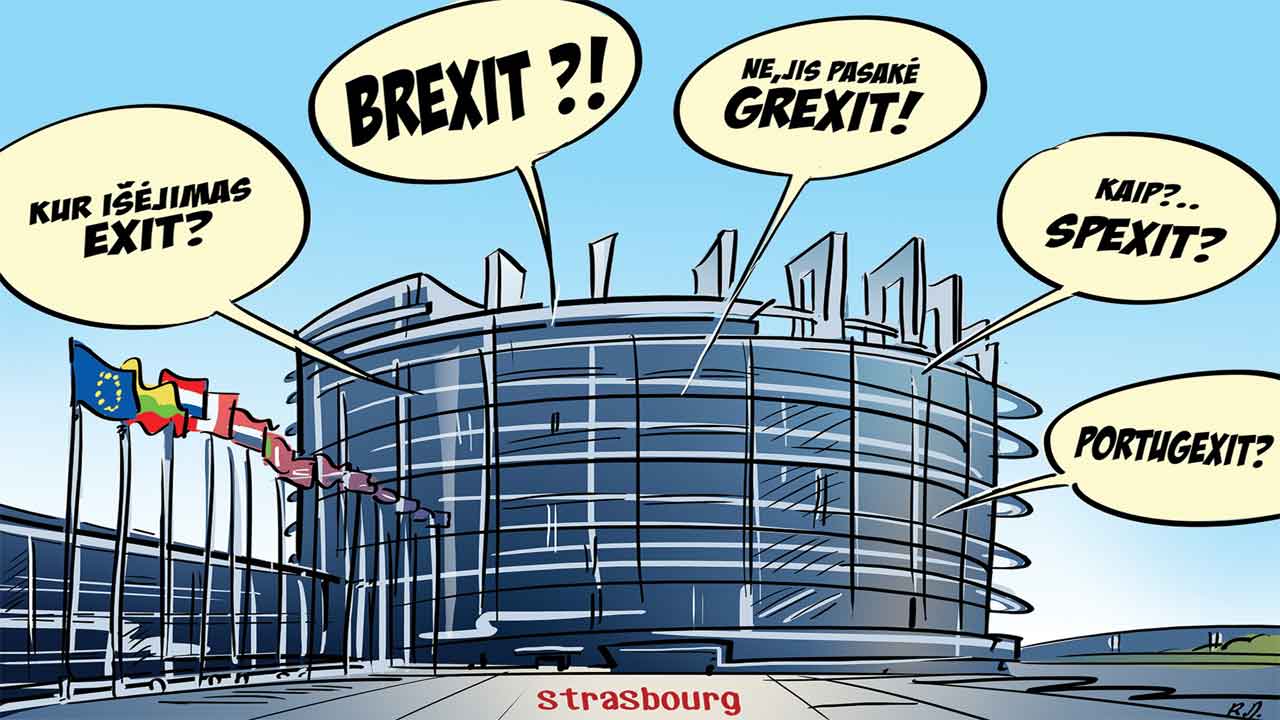
The “Brexit” is an abbreviation of “British Exit”, referring to the withdrawal of the United Kingdom from the European Union, a term inspired by “Grexit” evoked in summer 2015 Greece, in crisis, faced with sanctions. This is a voluntary departure from the European Union. On January 23, 2013, Prime Minister David Cameron announced that he will hold a referendum on his country’s membership to the EU. This took place on 23 June 2016. According to final results published on June 24, the British population decided to leave the EU with 51.9% of votes. Prime Minister David Cameron announced his resignation a few hours later. The UK is now preparing to leave the European Union – a process that could last two years, given the time to negotiate new agreements with the EU.
The economic consequences are huge, and experts as well as business leaders at the international level have their own opinion about it. For some, leaving the EU will be a political disaster, for others, it is an event that will restore faith in the common project of a unified Europe. Following these results, the economic block will be losing one of its three major powers, one of the largest financial centres in the world and the first diplomatic partner of the US in Europe.
Nearly 43 years after joining the club, the UK is leaving. Once the results were announced last Friday, at the dismay of most pundits, the performance of stock markets around the world were reminiscent of 2008 – albeit a much more subdued correction. A centre for many corporate headquarters, London is trying to reassure businessmen and investors. Economic actors had indeed warned before the referendum that Brexit would have a very negative impact on financial operations.
As a result of the UK’s referendum result, the pound has seen a collapse. This is bad news for the Brits, but not necessarily for foreign tourists visiting the UK. With the pound crashing, the purchasing power of foreign tourists in Britain will rise. As long as inflation remains stable. But this is not for long. Brexit will also create difficulties for Brits wishing to travel to Europe. So far, a single identity document was sufficient to move within the Schengen area, but the withdrawal of the country from the EU implies that a visa might be required when travelling to and within continental Europe. In addition, foreign travel and purchases will be expensive with the fall of the pound against the euro.
Inflation
The UK enjoys multiple forms of aid from the EU, especially in agriculture and manufacturing. For example, British farmers could count on more than euros 4 billion in terms of annual assistance. With possible withdrawal of these subsidies, food production will experience rising costs of production, which will affect British exports and consumers. According to international economists, the Bank of England will be forced to increase interest rates to counter inflation and save the pound. This will have a direct impact on consumption, on cost of production and also, on the real estate sector as it will drive mortgage rates up in a country where a large proportion of the population is repaying house loans.
Employment
Britain faces a huge risk of the relocation of global enterprises. These companies chose to settle in London to benefit from free access to European markets and other facilities. But with the withdrawal of the country, competitiveness will be greatly undermined, hence the risk of huge job losses. Ironically, conservation of British jobs was a strong theme of the campaign for the Brexit.
According to the British press, Jamie Dimon, CEO of JPMorgan, warned in early June that the US bank, which employs just over 16,000 people in the UK at six sites, could remove from 1,000 to 4,000 employees – particularly in back-office functions and trading rooms. Morgan Stanley is planning to transfer its share of 1,000 people from about 6,000 stationed in the UK to the EU while Goldman Sachs should transfer at least 1,600.
Expatriates in Europe
Brexit may be even more of a headache for the 1.3 million British expatriates living in other European countries, including Spain (319,000), Ireland (249,000), France (171,000), or even Germany (100,000). For retirees, it’s even worse, because they will see their retirement income drop, as well as their real estate investments in their adopted country. Another problem concerns the future medical coverage of UK expatriates in Europe where they receive national medical facilities but paid by UK Public Health under bilateral agreements.
The business climate
Foreign investors, initially, will not be motivated to invest in Britain, while those already in operation will put any expansion on hold until the situation stabilises. The instability will also cause a decline in consumption because British consumers would be tempted to be cautious and spend less, favouring savings. This will lead to a contraction of the economy and sluggish growth affecting small and medium enterprises and causing further job cuts.
Economist Frankie Tang, who also operates as an Investment Consultant, is of the view that there is no need to panic because the direct consequences are manageable. “I do not think we should really panic because our trade and other exchanges with Britain are very minimal compared to other countries in the European Union. We do not get many British tourists and we have very few British investors in Mauritius. Even among the purchasers of properties in Mauritius, there are very few British citizens. I think we are wasting time debating the issue. We have other priorities. Besides, we have already set up our ‘Africa Strategy’ and we are increasingly targeting Asia, including China and India. Diversification is already a reality since long, I must say we are already ahead of Brexit. However, the problem could arise if Europe as a whole faces a severe crisis, because if the Euro depreciates in the long term, then our tourism revenue will be affected.”
Arvind Nilmadhub, economist and Director of Afribrains consultancy firm, agrees that the situation is currently blurred with regards to the impact of Brexit on our economy, but he says we have a breathing space of about 27 months. “Speculation is rife, but changes are not for tomorrow. However, this doesn’t mean we should sit back on our laurels and wait. Far from that. We should react to the opportunities arising, and review our strategies and policies as I can see that we can easily convert threats into opportunities, and there are loads of them. We must not miss the train. Many doors are opening. Mauritius needs a Think Tank team comprising of the best brains to ponder over these issues and come up with meaningful strategies and action plan. We have always been able to overcome the most difficult situation and I strongly believe in our resilient capacity once again,” he says.
Brexit Analysis
The decision of Britain to leave the EU is not done yet and there are still speculations that there will be veto votes by other EU members to prevent Britain from leaving the EU. So, we can say we have 27 months of breathing time. However, it is not time to wait for the 27 months to lapse. It is high time to react now. Let us look at the risks and some remedial actions which can be taken.
Trade with Europe
Risks
◆ With a fall in GBP and EURO, our exports to UK and EU are expected to fall. This will negatively impact on the Mauritian exporters and thus local economy. A fall in the revenue.
◆ We can expect a fall in tourists from our main market EU.
Opportunities
◆ It’s time to renegotiate our terms of trade with UK, EU as well as individual countries.
◆ We could also explore other emerging countries such as Turkey, Russia, Azerbaijan and Kazakhstan.
◆ With Asia – Africa air corridor, we should focus on attracting more visitors from both Asia and Africa.
Foreign Direct Investment
Risks
◆ We can expect FDI emanating from EU and UK to fall. There is a direct relationship between FDI from UK and EU. A fall in FDI in EU leads to a higher fall in FDI in UK as shown in the graph below:
Source: Direct Investments, Bank of Mauritius
Opportunities
◆ Netherlands, Ireland, Cyprus are at risk of contagion with Brexit. It’s time to reinforce our investment promotion activities in England, and the countries mentioned above as well as with Germany and France.
◆ Moreover, European headquarters of non-EU firms are in the UK, with the UK hosting more HQs than Germany, France, Switzerland and the Netherlands put together. It is time to attract these companies to set up their headquarters in Mauritius.
◆ Attract financial companies from UK, Netherlands, Cyprus and Ireland to set up in Mauritius.
◆ Encourage Mauritian Diaspora to settle and invest back in Mauritius
Visa/Immigration
Risks
◆ We can expect a tighter immigration and visa process. Immigration is a fraught political issue in the UK and EU, both because the costs and benefits are not distributed evenly and as perceptions have become disconnected with reality, partly due to hostile media coverage. The UK will most probably tighten immigration and adopt a points system as used by Australia.
◆ Access to UK universities could become more difficult for Mauritian students given the risk factor when the UK tightens migration controls.
◆ Mauritians travelling to the UK may need a visa when entering UK or other countries from the UK. That means extra constraints and extra costs.
Opportunities
◆ Sign agreement with UK to encourage movement of labour from Mauritius to UK. This will help UK in coping with shortage of labour as well as help Mauritius through remittance income from Mauritians working in UK.
◆ Work with the UK immigration department for a quick visa process for Mauritian students as well as Mauritians travelling to EU from UK.
Courtesy: Afribrains

 Par
Shaffick Hamuth, Yaasiin Karimbocus
Par
Shaffick Hamuth, Yaasiin Karimbocus






 J'aime






![[[{"type":"media","view_mode":"media_large","fid":"21112","attributes":{"class":"media-image wp-image-35040 alignleft","typeof":"foaf:Image","style":"","width":"375","height":"339","alt":"passport"}}]]](/sites/default/files/wp-content/uploads/2016/07/passport_0.png)
![[[{"type":"media","view_mode":"media_large","fid":"10782","attributes":{"class":"media-image wp-image-17021 alignleft","typeof":"foaf:Image","style":"","width":"299","height":"256","alt":"frankie tang"}}]]](https://defimedia.info/wp-content/uploads/2016/02/frankie-tang.jpg)
![[[{"type":"media","view_mode":"media_large","fid":"13331","attributes":{"class":"media-image wp-image-21988 alignright","typeof":"foaf:Image","style":"","width":"301","height":"243","alt":"Arvind Nilmadhub"}}]]](https://defimedia.info/wp-content/uploads/2016/03/Arvind-Nilmadhub.jpg)