Publicité
[Blog] The War’s Distant Fire, Africa’s and Mauritius Immediate Reckoning
 Par
Guest .
Par
Guest .
Publié le:
6 July 2026 à 01:44





 Par
Guest .
Par
Guest .

By Dharamraj Deenoo
The war raging in the Middle East is thousands of kilometers away, yet its shockwaves are pounding African shores with relentless force. Innocent populations - who neither lit this fire nor chose this path - are paying the price in weakened currencies, soaring energy costs, and disrupted food systems.
Africa, including Mauritius, stands at a crossroads. The conflict has torn through global energy markets, currency trading floors, and fertilizer supply chains. Twenty-nine African currencies have already weakened since the fighting intensified. Oil prices have surged by more than 50 percent as of late March 2026. And just as farmers enter the critical March-to-May planting season, the Gulf’s energy disruptions threaten the supply of ammonia and urea - inputs that millions of households depend on for their harvests.
These are not forecasting. They are realities unfolding in real time.
Tangier: A Continental Council of Urgency
On the margins of the 58th Session of the UN Economic Commission for Africa in Tangier, Morocco, four of the continent’s most influential institutions - the African Development Bank, the African Union Commission, the UNDP, and UNECA - convened to confront this storm. Their joint findings, soon to be published, carry a warning that should echo in every Ministry of Finance:
This crisis is moving faster, through tighter channels, than any disruption Africa has faced before. Unlike the commodity price collapses, the 2008 financial meltdown, or the COVID-19 pandemic, policymakers now have almost no runway. The feedback loops are immediate, the exposure concentrated, and the margin for error perilously thin.
The Currency Cascade
Currency weakening alone sets off cascading consequences:
Governments preparing their next budgets must reckon with this compressed timeline. The usual buffers - reserves, subsidies, gradual adjustments - are being overwhelmed by the speed of transmission.
The Call to Action
Africa did not start this war, yet it bears its burdens. That injustice must be transformed into resolve:
Cascading Consequences of Currency Weakening
For the 29 African nations whose exchange rates have deteriorated, the impact is automatic and unforgiving. External debts - denominated largely in dollars and euros - have become more expensive overnight, without a single new loan being taken. Simultaneously, the import bill for food, fuel, and fertilizer, all priced in foreign currency, has climbed in lockstep.
Households at the bottom of the income distribution, already stretched thin by post-pandemic inflation, are absorbing the shock first and hardest. Their struggle is not abstract - it is lived daily in rising food prices, higher transport costs, and dwindling purchasing power.
Agriculture: The Most Urgent Dimension
Perhaps the most pressing dimension of this crisis is agricultural. Disruptions to Gulf energy supplies are limiting Africa’s access to ammonia and urea - the building blocks of fertilizer - at precisely the moment when farmers need them most.
The March-to-May planting season is not negotiable. It cannot be deferred or rescheduled. Miss it, and the consequences arrive months later in reduced harvests, compounding risks of crisis and food insecurity. The forthcoming report explicitly warns of emergency conditions for low-income households and import-dependent economies.
For a continent where food imports represent a substantial share of consumption, and where climate variability already makes agricultural planning precarious, the fertilizer crunch lands as one blow among several arriving simultaneously.
Tangier: Plain Speaking from Africa’s Institutions
The language from the four institutions’ leaders in Tangier was strikingly direct. Less the measured diplomacy of multilateral communiqués, more the register of leaders convinced that the situation demands plain speaking.
Africa has been hit by too many external shocks not of its making. The UNECA framing carried the weight of accumulated grievances:
UNECA’s Call: Two Tracks of Action
The UNECA call was for decisive action on two tracks simultaneously:
Financing Africa’s Own Future
Crises like this reinforce UNECA’s central message: Africa must finance more of its own future. The AU Commission was equally blunt, warning that continued escalation of the conflict worsens global instability with serious implications for energy markets, food security, and economic resilience -pressures felt most acutely in Africa.
The African Development Bank widened the lens further. As global crises multiply, Africa’s response must evolve from merely managing shocks to actively fostering resilience. Swift, coordinated action is required - leveraging the comparative strengths of African institutions and development partners alike.
Three Time Horizons of Response
The joint report organizes its recommendations across three time zones, recognizing that immediate crises and structural vulnerabilities cannot be addressed with the same tools, but must be tackled together:
AFCFTA: From Vision to Urgency
The AFCFTA, long heralded as the architecture for a more self-sufficient African economy, becomes more urgent with each external shock. Every disruption—from pandemics to wars—exposes the continent’s dependence on global supply chains it does not control. The call now is not for gradual implementation, but for acceleration: to make regional trade the backbone of resilience, and sovereignty the shield against future storms.
The Long-Term Horizon: Ambition and Necessity
The long-term horizon is the most ambitious, and arguably the most important. It centers on domestic resource mobilization and the creation of African financial safety nets, including the accelerated implementation of the African Financing Stability Mechanism or the setting up of an African IMF-African Regional Monetary Fund.
The UNDP’s vision is clear: a continent that has built the institutions and financial infrastructure to weather future shocks on its own terms. With the right mix of policy choices, financing tools, and political resolve, Africa can not only withstand this crisis but emerge stronger—more resilient, more self-reliant, and better positioned to shape its own economic destiny.
A Pattern in Africa’s Modern History
There is a pattern that runs through Africa’s modern history:
Each crisis produces the same diagnosis: the continent is too exposed, too dependent on external financing, too reliant on imported energy and food, too vulnerable to decisions made in distant capitals and trading rooms.
And each crisis produces the same prescription: regional integration, domestic resource mobilization, energy transition, food sovereignty.
Will This Crisis Supply the Urgency?
The haunting question is whether this crisis - arriving with unusual speed and concentrated force- will finally supply the political urgency that has so often been absent when conditions were calmer. The Tangier Declaration hopes it will.
But families across 29 weakening-currency economies, paying more for cooking oil and bread, may not have the luxury of waiting. For them, the 3Fs—fuel, food, and fertilizer—are draining wallets daily.
Mauritius initiatives to curb the effect of the war:
PNQ Reply and Domestic Response
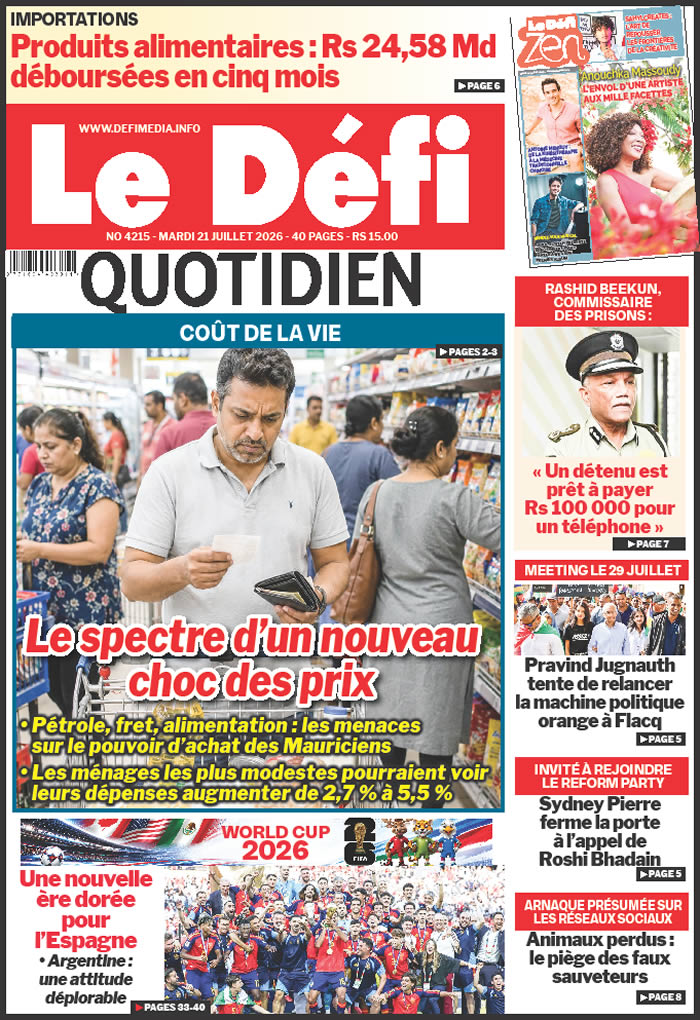
Mauritius is living this crisis in real time. In Parliament, Last Tuesday the PNQ reply acknowledged the risks: Gulf tensions are driving up oil and commodity prices, threatening inflation and household budgets.
The government’s 2025–26 Budget and new food security frameworks attempt to respond:
Yet the PNQ reply underscored the fragility: households at the bottom of the income distribution are absorbing the shock first and hardest. For them, the 3Fs - fuel, food, and fertilizer - are draining wallets daily.
The Pattern and the Question
Africa’s modern history shows the same pattern: external crises send shockwaves, Africa absorbs damages, and the prescription is always the same - regional integration, domestic resource mobilization, energy transition, food sovereignty.
The haunting question remains: will this crisis, arriving with unusual speed and concentrated force, finally supply the political urgency that has so often been absent when conditions were calmer? The Tangier Declaration hopes it will. Mauritius’ PNQ reply shows the urgency is already here.
 J'aime