
Publicité
[Blog] Mental Change: The Missing Link in Mauritius’ Vision 2050
 Par
Guest .
Par
Guest .
Publié le:
28 December 2025 à 10:01





 Par
Guest .
Par
Guest .
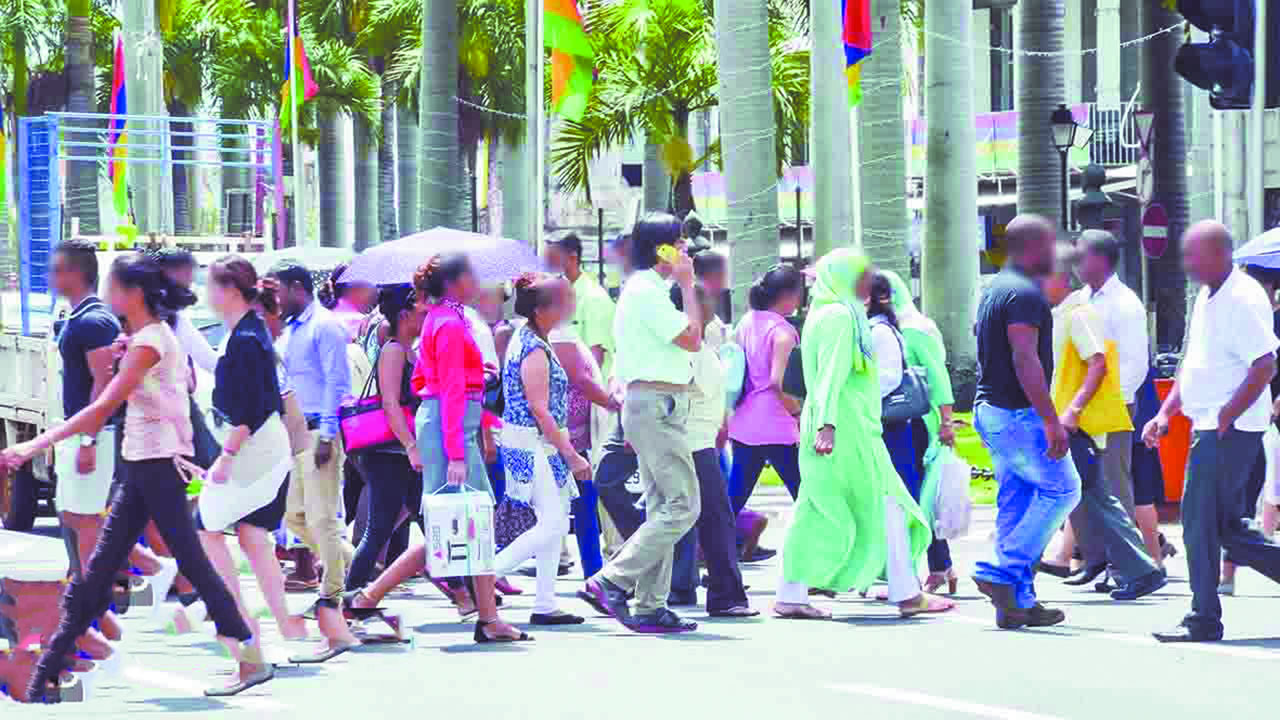
Mauritius stands at a decisive crossroads. The Prime Minister’s guardianship approach, coupled with the ethos of good governance, has reignited national debate on what it truly means to become a developed, high income country. In his recent interview with Nawaz Noorbux on Radio Plus, the Prime Minister outlined a vision of a united and confident citizenry, infused with moral and ethical values, living in a democratic, tolerant, and prosperous society. Yet beneath the inspiring rhetoric lies a sobering truth: achieving this vision requires more than policy reforms or economic restructuring. It demands a profound mental change across all layers of society.
The Government’s Programme and the 2025–2026 Budget echo the same aspirations: a competitive, dynamic, and resilient economy, supported by a citizenry proud of its achievements and secure in its identity. But the strategic challenges confronting Mauritius are not merely technical—they are deeply value laden. They require a shift in mindset, a transformation in how Mauritians think, act, and relate to one another. Without this mental change, Vision 2050 risks becoming a hollow slogan rather than a lived reality.
The Prime Minister’s vision identifies nine major challenges, each demanding its own form of mental transformation.
Mauritius’ unique plurality—its mosaic of ethnicities, religions, cultures, and languages—is both a strength and a stumbling block. True unity requires sacrifice and mental readiness to embrace a common Mauritian identity. As long as groups cling rigidly to narrow interests, integration will remain elusive. A study on the challenges facing public administration in a plural society could help chart a path toward genuine national cohesion.
A psychologically liberated and confident society must be distinguished by its pursuit of excellence. This is not simply about technical skills but about cultivating pride, resilience, and a mindset that refuses mediocrity. Excellence begins in the mind.
A moral and ethical society cannot be legislated into existence. It requires continuous education in homes, schools, workplaces, and social organisations. Integrity in leadership is non negotiable. Without deliberate mental change, ethical decay will undermine progress.
Mauritius must nurture a consensual, community oriented democracy that can serve as a model for other developing nations. This calls for cooperation, compromise, and honest dialogue among leaders and communities. History—from the Magna Carta to the Bill of Rights—reminds us that democracy thrives only when rights and freedoms are safeguarded.
Unity in diversity demands tolerance and compromise. Mauritians must feel free to practice their customs and beliefs while belonging to one nation. Achieving this noble vision requires profound mental change anchored in justice and liberty.
Mauritius must evolve from being a consumer of technology to a contributor to global innovation. Citizens must be oriented toward creativity, research, and production of emerging technologies. The new ICT leadership offers promise, but society must be mentally prepared to embrace innovation and digital transformation. A National AI and Machine Learning laboratory to incubate fintech and other technological advancement will be required to make Mauritius an AI hub.
A resilient family system must anchor our social fabric. Rising individualism and neglect of the elderly highlight the need for cultural and mental change. Stronger family ties, reinforced by legislation and civic responsibility, will ensure dignity for senior citizens and protection for vulnerable groups. A Maintenance of Elders Act with provision to recall donated property should be introduced to safeguard elders being left to overcome loneliness.
Economic justice requires equitable distribution of wealth and full partnership in progress. Past interventions, though stabilising, fostered dependency among disadvantaged groups. Mental change is needed to shift from reliance on state support toward competitiveness and self reliance.
A prosperous society depends on competitiveness, dynamism, and resilience. Strong work ethics, productivity, and adaptability are essential in a rapidly changing global economy. Mauritians must be mentally prepared to embrace discipline, innovation, and flexibility.
The challenges outlined above are not insurmountable. But they require a collective recognition that mental change is the missing link in Mauritius’ development journey. It is not enough to change policies or institutions; the deeper transformation must occur in the minds and characters of citizens. This means cultivating tolerance, integrity, humility, loyalty, justice, patience, industry, honesty, and modesty—not as abstract ideals but as lived virtues.
Mental change is not a short term project. It is a long and continuous process, rooted in trust and consistency. It is about building character traits that endure across generations, ensuring that Mauritius’ progress is not superficial or manipulative but genuine and lasting.
Vision 2050 is ambitious, inspiring, and necessary. But it will remain aspirational unless Mauritians embrace the mental change required to meet its challenges. The task ahead is clear: to build a nation whose people are united in identity, resilient in adversity, ethical in conduct, democratic in spirit, tolerant in diversity, innovative in outlook, caring in relationships, self reliant in economy, and disciplined in work. Only then will Mauritius truly become the developed, high income nation envisioned by its leaders—a nation proud not only of its prosperity but of its soul.
Nine Challenges, one mindset: the call for mental change.
By Dharamraj Deenoo
Former DPS and now a Civic Steward
 J'aime