






Publicité

Image
By Rama Valayden, Senior Counsel
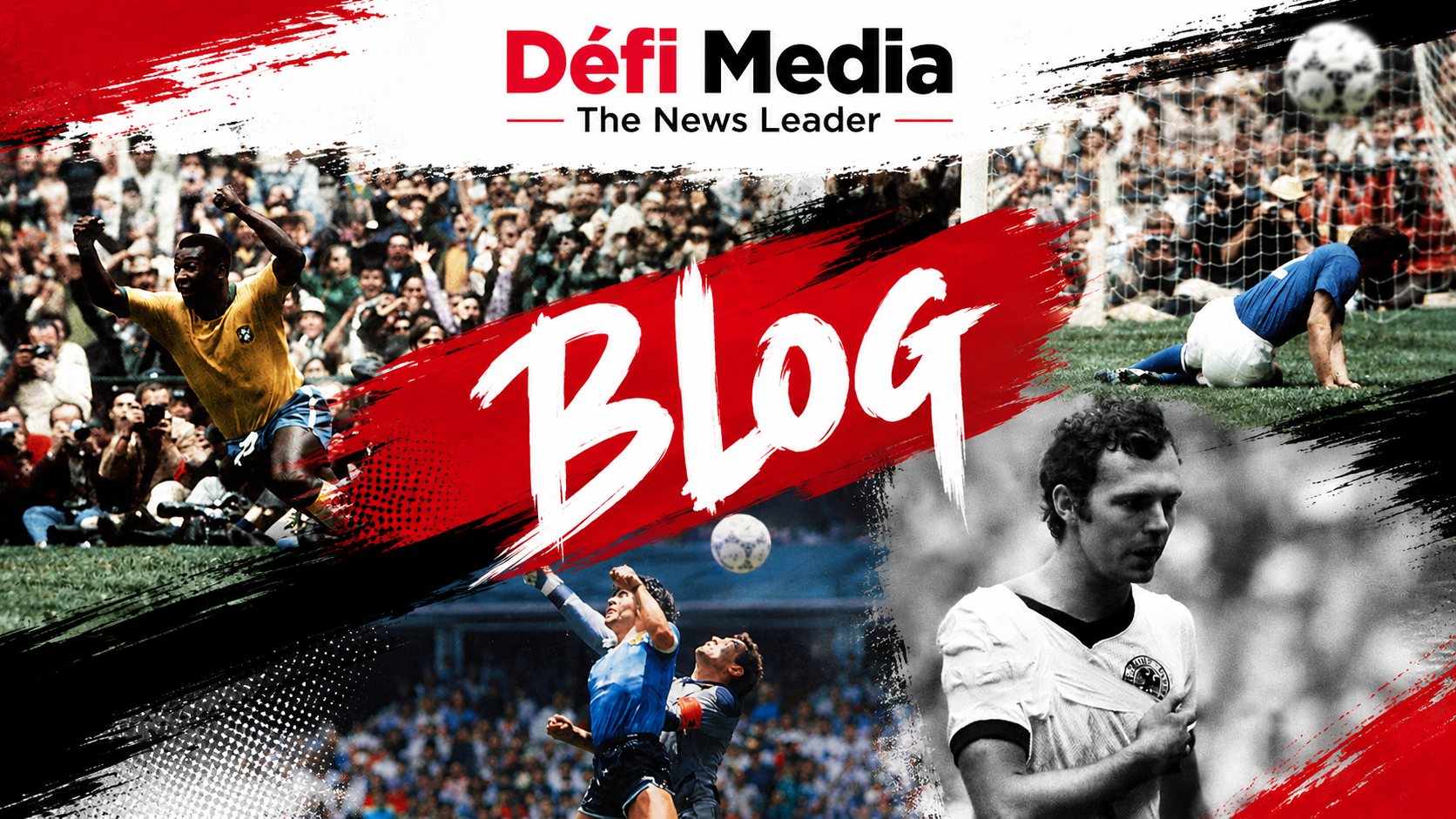
The 1970 World Cup, I was a student at Notre Dame Des Victoires RCA – Rose Hill and I have some vague memories which have fused with the fantasies of a young kid. I remember that the majority of football fans in Rose Hill, Stanley were for Brazil but still the street corner talk was more about the king Pelé. I did not watch any match on TV. We already had colour TV in Mauritius. I watched repeatedly extracts of the final at Cinema Royal Rose Hill.
The 1970 World Cup in Mexico is still widely regarded as the most spectacular tournament in football history. For many experts, the football tournament is the pinnacle of the “beautiful game”. I can still stop to watch that Brazilian team of 1970. It remains for me the greatest football team up to now. It was led by Pelé but the team comprised also legends like Carlos Alberto, Jairzinho, Tostão, Gerson, Rivelino and others whose names I have forgotten.
At Cinema Royal, people stood up (even months later after the World Cup final) to applaud the iconic goal of Carlos Alberto. In that final the great team of Pelé dismantled Italy’s famous Catenaccio (door-bolt) defence in a 4-1 victory (could have been much more) thus securing the third title and earning the Jules Rimet Trophy permanently.
From the radio, I still remember hearing Jean Roland Delaitre commentating on the game between Brazil and England which is immortalized by the “save of the century” by Gordon Banks to deny Pelé a header goal. Following the save Pelé instantly applauded Gordon Banks.
And also, thanks to Cinema Royal, I watched excerpts of the match Italy v West Germany which remains one of the most thrilling matches ever played. At full time, the match was one all. In extra time, the teams traded five goals during an exhausting dramatic extra time with Italy prevailing 4-3.
From Roland Delaitre, I learned and still remember that the 1970 tournament was the first tournament to use yellow and red cards as visual disciplinary measures. From the German team I only remember Sepp Maier, Berti Vogts and Franz Beckenbauer and from the Italian team I remember only Dino Zoff and Gigi Riva.
1974 World Cup
Television sets were invading nearly one out of two houses in Rose Hill. I remember that there was no Pelé to grace the green turfs but there were new iconic players like the dazzling Johan Cruyff who led the Holland team and the German captain Franz Beckenbauer who marshalled the German defence.
The Holland team known as the Clockwork Orange was playing “total football”. Everybody attacks, everybody defends. There were constant interchanging roles and tactical brilliance (this was when I started to understand tactics and its importance in football). In the final, the Kaiser Franz Beckenbauer led the German defence with elegance and managed to outclass Cruyff and lifted the newly introduced world cup trophy. The quickest goal was scored by Holland in a penalty in the first minutes of the game.
The political dimension.
In 1974, I was an adolescent who was eating books like no other youngster from my surroundings and therefore I supported East Germany during the group stage and the most political match was supposedly won to my great delight by East Germany 1-0. I also remember the defeat of Haiti to Italy 3-1 but a player Emmanuel Sanon scored against Dino Zoff thus ending Zoff’s record streak of more than 1000 minutes without conceding a goal.
1974 is also the rise of the Polish team who came third in the tournament by beating the Brazil of Rivelino and which saw the emergence of Lato who won the Golden Boot. Lewandowski will surpass him later on to become the greatest Polish player.
It is apposite to note that Germany was the first team to win the current solid Gold FIFA World Cup trophy which was crafted by an Italian Silvio Gazzaniga.
Who was Jules Rimet and what were his motivations?
Brazil in 1970 won the World Cup for the third time and was given the Jules Rimet Cup for so doing (1958 – 1962 – 1970 and in every one of these World Cups, Pelé played a major role).
Jules Rimet believed in a global football championship, independent of the Olympics and open to all, including football professional players.
Akin to Baron Pierre De Coubertin, Jules Rimet believed that football could bridge borders and promote international peace. He believed also that football can transcend language, borders and political conflicts to foster international camaraderie and fair play. He was the third president of FIFA, was in office for 33 years which means he was the longest serving president.
1978 World Cup – Argentina
I was by 1978 already a human rights militant and I was dead against the host country Argentina as it was at that time under a brutal military dictatorship with thousands of opponents reported to have disappeared. The climate of fear in Argentina contrasted with what is supposed to be football and joy!
I remember very well the World Cup as I was following it on television at the home of my uncle Somod at Hugnin Road, Rose-Hill.
How can one forget that in the dying seconds of normal time in the final, Rob Rensenbrink hit the post when the score was 1-1. Argentina won their first ever World Cup defeating Holland after extra time in a passionate final at the Estadio Monumental. The great hero of the tournament was Mario Kempes who won the Golden Boot and the Golden Ball (best player). Kempes scored twice in the final. It is good to remember that the great Johan Cruyff did not play for Holland.
Cruyff did not play following an incident in his home in Barcelona where criminals broke into his home, tied him and his wife and held them at gunpoint while their children were present. In 1978, I was labouring under the impression that Cruyff boycotted the tournament to protest against Argentina’s military dictatorship. It was only in 2008 that I knew the true reason. He was a hero for me as I believed at that time that he had the guts to stand against the military Junta. The military was headed by the general Videla. Under his dictatorship, a dirty war campaign of forced disappearances, torture and murder of political opponents and suspected leftist guerillas. According to Amnesty International, it is reported that around 15,000 - 20,000 people had disappeared during the military Junta’s “dirty war” and according to the mothers of Plaza Pe Mayo, the true number is closer to 30,000. The key players for Argentina as I remember are :
(1) Mario Kempes (“El Matador”)
(2) Daniel Passarella (Great header of the ball despite his size, a bit like Martinez of Manchester United but more “gracious”)
(3) Osvaldo Ardiles (who later shined in England for Tottenham)
The Argentinian team was coached by Menotti. Those of my age who have followed the 1978 World Cup will surely remember the Scottish goal by Archie Gemmill against Holland which led to their historic win against Holland 3-2.
Who does not remember how well France played and yet lost to Italy (2-1) and Argentina (2-1) finishing third in a “Groupe de la Mort”. They showed a lot of promise under coach Michel Hidalgo. There was also Michel Platini. I still remember the tears of Marius Trésor and the St Etienne’s player Dominique Rocheteau.
1982 World Cup - after the 60-0 of PSM-MMM in the general elections. Key facts which have tattooed my memory:
The 1982 Brazil’s team is widely considered as the best team never to win the World Cup. They played mesmerizing football but unfortunately were undone by Italy’s defence. Even my grandmother wept after the defeat of Brazil.
Who can forget the hat trick of Paolo Rossi against Brazil? Who can forget the grotesque foul of Schumacher against Patrick Battiston during the semifinal between Germany and France?
Who can forget the intense and violent match long fouling of Claudio Gentile’s against Diego Maradona while marking the latter. It is apposite to note that following international uproar to prevent this kind of unsporting brutality FIFA changed the regulations for the subsequent tournament in Mexico.
Falklands war:
At the beginning of the tournament there was a lot of apprehension that England, Northern Ireland and Scotland would withdraw from the tournament because of the Falklands War. As no other country was considering withdrawing the British Cabinet allowed the British National Teams to participate the “Disgrace of Dijon”.
It is worthy to remember that West Germany and Austria played out a narrow 1-0 win for Germany and Austria played out a narrow 1-0 win for Germany that allowed both teams to qualify while eliminating a very good team of Algeria.
The format changed, as a result of that ignominy, for future tournaments.
• 1982 was also the appearance of Diego Maradona on the pitch. Everybody knew that he was to become what he became …
• 1982- first penalty shoot-out. The match which France should have won against West Germany in normal time ended up with a win for Germany.
Italy defeated Argentina, Brazil and Germany to win the trophy.
The great players of the 1982 World Cup for me were (in descending order):
(a) Socrates
(b) Falcao
(c) Maradona
(d) Rummenigge
(e) Zico
(f) Paolo Rossi
(g) Manuel Amoros
(h) Michel Platini
(i) Manuel Amoros
(j) Michel Platini
(k) Dino Zoff
(l) Bruno Conti
(m) Marco Tardelli and his passionate celebration after the final …
1986 Final - The ultimate one man show in a collective game.
I was in England! In London everywhere you could feel the passion for England.
Which team do you support Rama? Was the common question from the natives of England. I did answer diplomatically but deep down I was not a full fan but a “touch and go” fan.
The tournament was defined by incredible individual skill and high scoring drama. Diego Maradona provided the crucial assist in the final and scored five goals in the tournament. He also created five others.
In the final, West Germany showed incredible grit to pull down from 2-0 down to 2-2 before losing to a goal from Burruchaga. Final score Argentina 3 – Germany 2. The match my generation will never forget is the quarter final match between England and Argentina when Diego Maradona punched a looping ball over advancing goalkeeper Shilton to score the goal which will be talked about forever. The match was played with the Panorama of the 1982 Falklands war. And then what followed is more mesmerizing….
Difficult to equal such drama. Maradona scored the goal of the century by dribbling past multiple English defenders, neutralizing the controversy with undeniable genius. I was happy for my hero. I was in another world. I did not even drink the cup of tea which was in front of me.
Do you know that the shirt worn by Maradona during this match was sold at an auction in 2022 for over 9 million dollars?
Argentina in 1986 was coached by Carlos Bilardo who built the 1986 team around Maradona. Superstar Cristiano Ronaldo described Maradona as “an unparalleled magician”. Can one find a better description? Not in my mind!
En passant, do you know who is the greatest player according to Maradona? Maradona stated that Di Stefano was superior to everyone, even himself and he also said that Magico Gonzalez was the best player he had ever seen and even better than Pelé.
1990 World Cup – Cameroon’s Indomitable Lions.
My last World Cup in Tooting Bec, London. First match of the tournament, Cameroon v Argentina. I nearly coerced everybody in my immediate to support and bet on Cameroon to win.
Was there a powerful rationale? No pure instinct and my unquenchable thirst for an African victory. The match was played in Milan Italy.
What do I remember? I remembered Cameroon finished the game with 9 men and in the second half Biyik scored a powerful header to score the winning goal. That match remains one of the most celebrated opening match shocks cementing Cameroon’s status as a global football force.
Argentina captained by the great Diego Maradona was managed by Carlos Bilardo. The match was also marked by Thomas Nkono. I can remember that Roger Milla, the Cameroonian striker, who was plying his trade in Reunion island stole my heart with his four goals and his iconic corner-flag hip swivelling celebrations.
Without Roger Milla, the whole tournament would have been a drab one.
I also remember the face of another great player who broke down in tears after receiving a yellow card in the semi final against West Germany which would have ruled him out of the final.
I also remember the ugly spitting incident when Frank Rijkaard spat into the hair of Rudi Völler.
The tournament was the lowest goals per game average less than 3 goals but a record of red cards. It was also noted that all teams were having recourse to extreme defensive tactics and were seen- to the displeasure of fans worldwide – passing back to their goalkeepers.
Despite being guided by the great Diego Maradona, Argentina relied heavily on their goalkeeper Sergio Goycochea’s penalty saving heroics to reach the final despite a difficult defensive campaign.
The overnight Italian icon was Toto (Salvatore "Totò" Schillaci). He was the tournament’s top scorer despite coming on as a sub. Germany won the final, much to my distress.
Who does not remember the red card given after Benjamin Missing’s hip high challenge on Claudio Canigia known now as “the greatest tackle in World Cup history”.
Quelle est votre réaction ?
 J'aime






0
0
Publicité
Translate to creole
Activé
length
13267
Translation Status
Auto Translate Pending