Publicité
[Blog] The Long Wait for Home: Understanding the Chagossian Struggle for Justice
 Par
Guest .
Par
Guest .
Publié le:
6 July 2026 à 01:44





 Par
Guest .
Par
Guest .
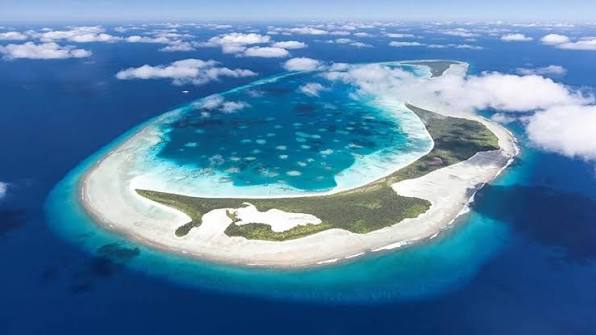
By Arvind Harris, observer of geopolitical issues
Fifty-five years is a long time to be away from home. For the Chagossian people, it has been more than five decades of displacement, struggle, and unwavering hope that one day they would be allowed to return to the islands where their ancestors are buried and where their "navels" are planted in the soil according to tradition.
As Mauritius and the United Kingdom navigate a complex sovereignty agreement over the Chagos Archipelago, it is important for us in Mauritius to understand the full story of our Chagossian brothers and sisters - not as political pawns in a geopolitical game, but as a people whose lives were uprooted, whose culture was scattered, and whose dreams of returning home remain alive.
A People Removed
Between 1968 and 1973, around 1,500 to 2,000 Chagossians were forcibly removed from their homeland by the British government to make way for a United States military base on Diego Garcia. They were loaded onto ships—some sleeping on decks that had previously carried animals and fertiliser—and brought to Mauritius and the Seychelles.
They left behind a life where "nature was our refrigerator," as one former islander described it. They left behind close-knit communities, a "natural way of life" where illness was rare and food was abundant from the sea and the land. They left behind the graves of their ancestors and the trees where their umbilical cords were buried - a tradition that physically and spiritually connects a person to their homeland forever.
The Reality of Resettlement
It is true that upon arrival in Mauritius, the Chagossians were free citizens. They had access to education and healthcare. They were allowed to seek work. But freedom on paper does not always translate into dignity in practice.
The compensation meant to help them start new lives was delayed for years. The £650,000 paid by the British government to Mauritius in the early 1970s did not reach the Chagossians until 1977. By then, according to their own accounts, 40 islanders had already died without receiving a single rupee of support. When money finally came from a subsequent 1982 agreement, it amounted to less than $5,000 per person - far too little to overcome the years of poverty they had already endured.
Many arrived to find themselves in the poorest neighbourhoods of Port Louis, living in shanty towns while they waited for the housing and gardens they had been promised. They found a Mauritius facing high unemployment and its own challenges as a newly independent nation. Speaking only their own Creole dialect and lacking formal education, they found themselves at the back of the queue for jobs. Generations have known poverty, and some have spoken of the sagren - a deep, cultural sadness - that has never left their community.
A Dramatic Intervention at 25,000 Feet
The depth of Chagossian determination to return home was recently demonstrated in the most dramatic fashion. When four Chagossians landed on Île du Coin in the Peros Banhos atoll as part of a protest against the sovereignty deal, they faced imminent deportation by British authorities. That was when history took an unexpected turn.
James Lewis KC, the chief justice of the British Indian Ocean Territory, issued a temporary injunction blocking their removal—and he did so from a plane flying at approximately 25,000 feet. Lawyers for the Chagossians had made an urgent application, and the judge responded mid-flight, ruling that there had been an "unreasonable delay" by UK authorities in granting the men permits to visit the territory.
The judge also noted something crucial: the protesters were about 120 miles (193km) away from the military base on Diego Garcia and, based on the evidence, "pose no threat to national security." He further observed that if they were deported, they would have "great difficulties in returning."
This ruling from 25,000 feet symbolises something profound about the Chagossian struggle. After 55 years of being ignored, of being shuffled between governments and treated as an inconvenience, a judge had to intervene from the sky to protect their right to simply set foot on their homeland. It speaks to the lengths to which Chagossians must go - and the extraordinary measures required - to have their voices heard.
More Than a Political Issue
Some may ask: why, after 55 years, does a group of Chagossians still want to return to islands many have never seen? Why now, when so many have built lives in Mauritius and the United Kingdom?
The answer is not simple, and it deserves our respect.
For the elder generation - those who were actually removed from the islands - the desire to return is about finishing their journey where it began. Lisette Talate, a Chagossian activist, lost two of her six children to "sadness" soon after arriving in Mauritius. Ansie Andre lost three children and could not speak for four years. These are not political statistics; they are human tragedies.
For the younger generation, the connection is about identity. When Rita Bancoult says, "My navel is buried there," she speaks for a people whose very sense of self is tied to a place they were forced to leave. Misley Mandarin, a British-Chagossian born in Mauritius who led the recent landing on Île du Coin, put it simply: "I am not in exile anymore. This is my homeland."
The Current Moment
The recent arrival of Chagossians on Île du Coin must be understood in this context. They are not trespassers on foreign land. They are the descendants of people who lived on those islands for generations before being removed by a foreign power.
Their action is, in part, a political statement - but it is a statement born of desperation. They feel that their future is being decided by two governments without their consent. The 2025 UK-Mauritius agreement, which would transfer sovereignty of the entire archipelago to Mauritius while the UK leases Diego Garcia for 99 years, was negotiated without meaningful Chagossian participation.
Some Chagossians fear this deal. They do not trust that their rights will be protected. They remember decades of marginalisation in Mauritius, of being marked by their poverty and background for "insults and discrimination," as a British High Court once recorded. They want to return to their homeland not as Mauritian citizens, but as British citizens - the nationality they held when they were removed and that many still carry today.
This does not mean they are anti-Mauritian. Many have family here, have worked here, have contributed to our society. But their trauma has created a deep distrust of any arrangement that does not put their wishes first.
A Shared Responsibility
As Mauritius prepares to assume sovereignty over the Chagos Archipelago, we have a responsibility to approach this transition differently than the British did 55 years ago. The Chagossians must be central to any plan for the islands' future, not an afterthought.
This means:
Listening to their concerns with genuine openness
Ensuring that any resettlement is truly possible, not just promised
Protecting their cultural sites and traditions
Guaranteeing that those who wish to return can do so with dignity
Respecting the rights of those who choose to remain in Mauritius
Looking Forward
The Chagossian story is not just a story of displacement and suffering. It is also a story of survival, of a people who have maintained their identity across over five decades and three continents. It is a story of elders who never stopped teaching their children about the islands, and of young people who grew up in Mauritius or the UK but still feel the pull of a homeland they have never seen.
When Misley Mandarin says his goal is to enable the 322 people who were born on Île du Coin and are still alive to "come home before they die," we should hear the humanity in those words. When Chagossians express fear about living under Mauritian rule, we should ask what we can do to build trust, not dismiss their concerns as political manipulation.
The islands will soon be Mauritian sovereign territory. That is the reality of the agreement. But sovereignty is not just about flags and borders - it is about people. A truly sovereign Mauritius should be confident enough to embrace the Chagossians as full partners in shaping the future of the archipelago, respecting their unique history and their deep, enduring connection to the land.
After 55 years of exile, the Chagossians deserve nothing less than to be treated as the rightful children of the islands - not as obstacles to be managed, but as a community to be welcomed home.
And if it took a judge ruling from 25,000 feet to remind the world of that truth, then let that image stay with us: a symbol of how high and how far the Chagossian people have had to reach, simply to be heard.
 J'aime