Publicité
[Blog] Driving with momentum across uncertainty and against gravitational pull of unpredictability
 Par
Guest .
Par
Guest .
Publié le:
20 June 2026 à 08:52





 Par
Guest .
Par
Guest .
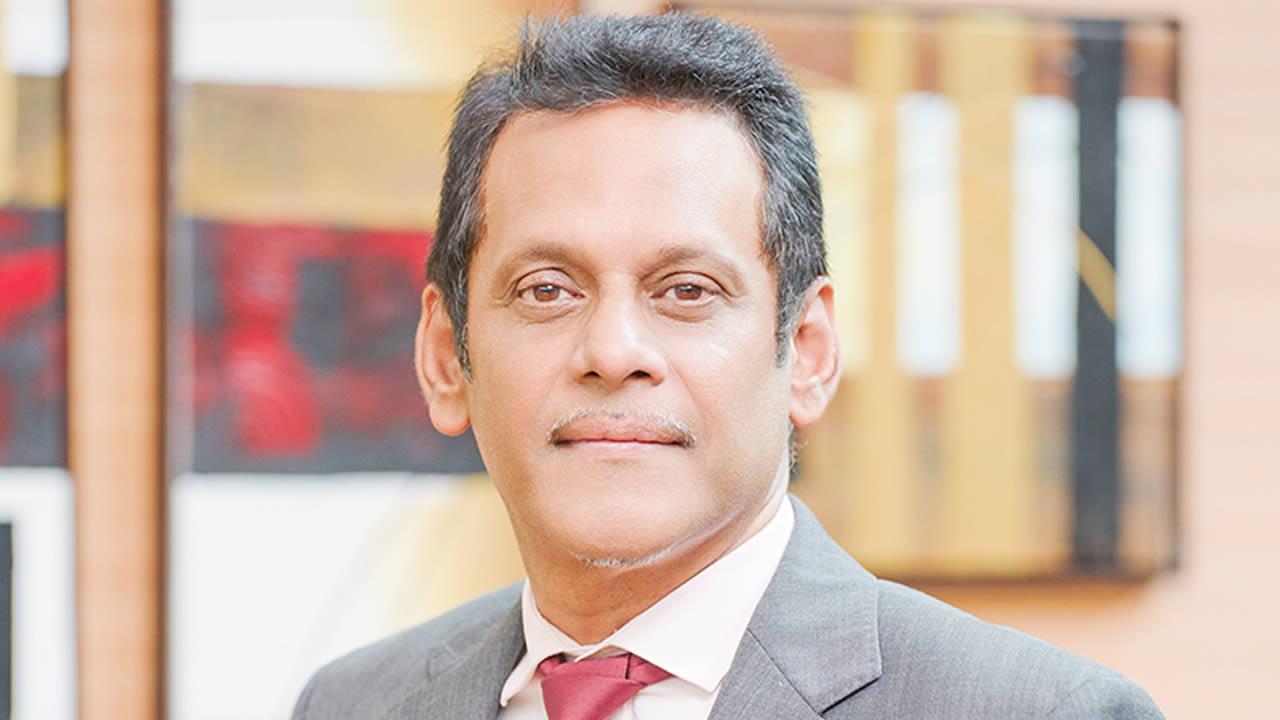
“A budget is more than just a series of numbers on a page; it is an embodiment of our values.” - Barack Obama
Dr The Honourable NAVINCHANDRA RAMGOOLAM, Prime Minister, Minister of Defence, Home Affairs and External Communications, Minister of Finance, Minister for Rodrigues and Outer Islands, delivered his Budget Speech for year 2026/2027 in the context of a challenging world environment characterised by economic upheavals, geopolitical tensions exacerbated by militarised confrontations and renewed nationalist sentiments coupled with our local key economic indicators already in bad shape. The focus of the present budget revolves around seven pillars, which include Artificial Intelligence (AI) & digitisation, unleashing the potential of SMEs and start-ups, modernisation of the economy, reinforcement of existing sectors, unlocking the potential of the Blue Economy and addressing investment. In order to achieve the objectives of our country, the Prime Minister stated that one has to adhere strictly to four guiding principles which are responsibility, solidarity, economic efficiency and social justice.
The Minister of Finance stated that in a world mired in uncertainty and in total disarray, Mauritius must stand prepared and get ready for the future which is yet becoming more unpredictable. Therefore, all actions undertaken must be supported by principles of good governance and responsibility. Also, there are challenges that are weighing heavily on the well-being of the Mauritian people and as such, there is a need to deal with them adequately and meaningfully. Four flagship projects have thus been announced which are, the Purchasing Power Shield projects, the 25by35 food security initiative, Access to Water for All and the Energy Secure Mauritius project. The Minister of Finance has also announced a series of measures that would act as a bedrock to strengthen the social compact for a future ready Mauritius. The policies geared towards achieving the former objective are anchored on the following, namely, Inclusive Education, Healthcare - Investing in Wellbeing and Better Services, Housing for Low- and Middle-Income Families, Ageing with Dignity, Poverty Reduction, Youth Empowerment, Strengthening the Nation through Sport, Upgrading Public Services, Law and Order, Gender Equality, Empowerment and Child Protection and Environment Enhancement.
When it came to tackling the issue of fiscal consolidation, the Minister of Finance made the clear distinction with fiscal austerity. He stated that in FY 2024 – 2025, the budget deficit was 9.3% and the debt-to-GDP ratio nearly 90%. The fiscal situation is now being seen as the major constraint to future development, and it will take some time to reverse the trend. Total revenue for the current fiscal year FY 2025 – 2026 is expected to be Rs 203.6 bn and total expenditure would amount to Rs 250.1 bn, leading to a budget deficit of Rs 46.5 bn, that is, 6% of GDP. The budgeted Rs 10 bn from Chagos would have brought the budget deficit to 4.7%, marginally lower than the initial forecast of 4.9%. Public sector debt would amount to Rs 681.9 bn as at end June 2026, equivalent to 87.8% of GDP compared to 88.5% in June 2025.
For FY 2026 -2027, total revenue, inclusive of receipts from Chagos, is expected to reach Rs 235.5 bn and total expenditure Rs 266.7 bn, which would translate into a budget deficit of 3.7% of GDP. The public sector debt is projected to continue its downward trajectory reaching 85.5% of GDP by end June 2027 and to fall below 80% of GDP by June 2029 through sustained commitment to restore fiscal sustainability and balance with inclusive growth.
The new elephant in the room, according to various stakeholders across many industries, is the application of a new tax band which is 20% of chargeable income above Rs 1m up to Rs 12m and 35% tax on chargeable income above Rs12m. The varied repercussions on taxpayers within those bands will be surely felt across the whole economy, especially with regard to expatriates who have elected to move to our jurisdiction based on their potential to bring their knowledge, expertise and experience along. Commendably, Value Added Tax (VAT) will not be increased however.
As was announced in previous budgets, the reform of our pension system was an imperative for the survival of our economy in the long term. Some useful measures have been brought, and it remains to be seen how these will be implemented. Of note, the State Age Pension (SAP) has now replaced the Basic Retirement Pension (BRP). Also, the Minister of Finance has announced that a Committee will be set up to examine the expenditure of each Ministry and ensure that the findings of the Director of Audit are acted upon accordingly. It remains to be seen to what extent this can be scrupulously followed given that its proper implementation will surely instil much-needed efficiency within our public sector.
“One of the great mistakes is to judge policies and programs by their intentions rather than their results.” – Milton Friedman
BDO
The FY2026/27 Budget seeks to balance fiscal consolidation with a future-ready growth agenda, set against external shocks, geopolitical uncertainty, climate risks and demographic pressures. Built around the guiding principles of responsibility, solidarity, economic efficiency and social justice, the Budget strategy is framed around AI and digitisation, start-ups and SMEs, expansion of economic space, modernisation of core sectors, development of the blue economy and easing of investment constraints.
The economy enters the year with positive momentum. In 2025, GDP expanded by 3.2%, inflation fell to 3.7%, unemployment declined to 5.7%, gross official foreign currency reserves reached USD 10.3 billion, tourist arrivals exceeded 1.4 million, and tourism earnings reached Rs 103.4 billion. The fiscal position remains the binding constraint. The FY2025/26 deficit is estimated at 6.0% of nGDP, public sector debt at 87.8% of GDP, and interest payments at Rs 26.9 billion, representing 10.7% of total Government expenditure. The Budget projects a deficit of 3.7% of GDP in FY2026/27, public sector debt of 85.5% of GDP by end-June 2027, and a debt ratio below 80% of GDP by June 2029.
The defining structural reform is pensions. The Speech states that the existing system had become a major component of Government expenditure, accounting for nearly 25% of expenditure in FY2024/25, while the worker-to-pensioner ratio declined from 16 in 1962 to 4.7 in 2025, with further projected declines. The reform introduces the State Age Pension, a means-tested structure and a revamped contributory retirement framework. Alongside consolidation, the Budget retains household-facing measures, including the Purchasing Power Shield, food security, access to water, energy security, unchanged VAT rate, and additional support for vulnerable groups. The Budget sets out a reform path built around fiscal repair, economic modernisation and social protection. Its effectiveness will depend on implementation discipline, institutional capacity and the ability to sustain reforms as trade-offs become more visible.
 J'aime