
Publicité
[Blog] Borrowed theories, lived violence : rethinking gender-based violence in Mauritius
 Par
Guest .
Par
Guest .
Publié le:
6 July 2026 à 01:44





 Par
Guest .
Par
Guest .
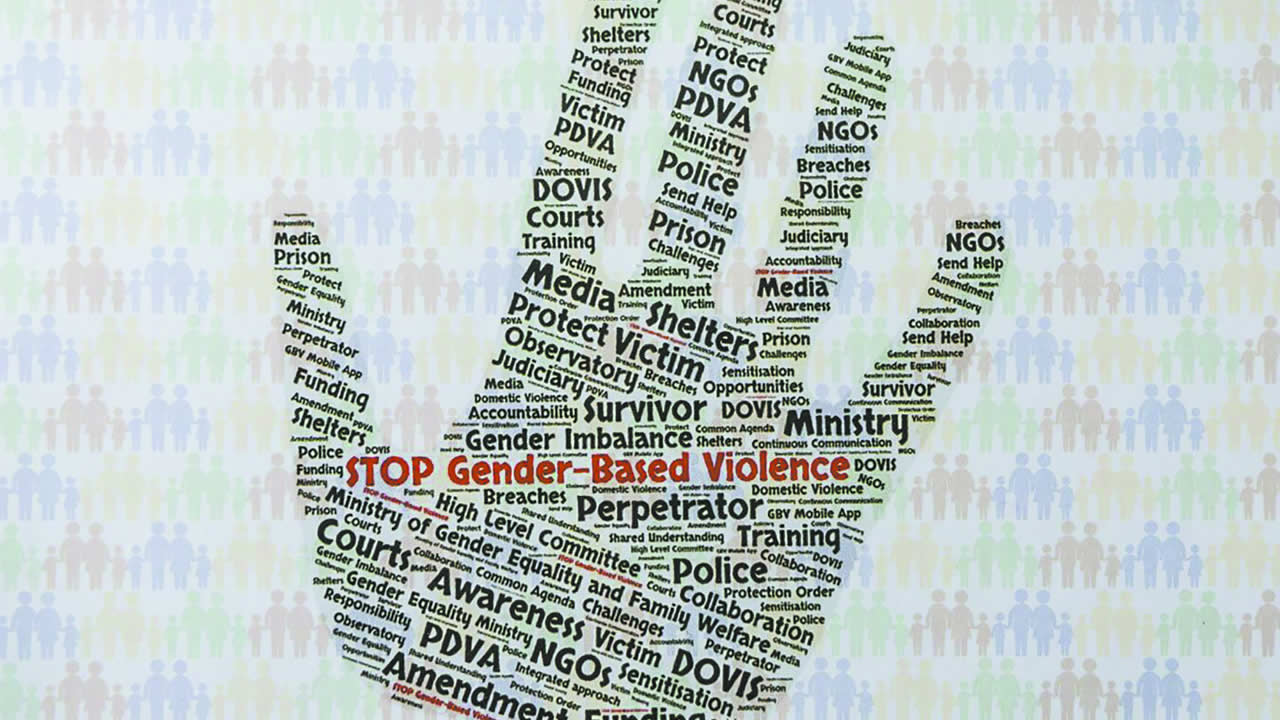
Mauritius speaks fluently about gender justice, yet struggles to confront gender-based violence in practice. Dr Pavi Ramhota examines why imported frameworks often fail to capture lived realities and structural inequality.
The recent intervention by Tanvi Ramtohul in Le Dimanche/L’Hebdo (5 April 2026) breaks an important silence surrounding gender-based violence (GBV) in Mauritius. But breaking silence is not the same as confronting reality. Mauritius today speaks fluently the language of gender justice, yet continues to struggle to translate that language into meaningful social transformation.
If we are serious about addressing GBV, recognition alone is insufficient. What is required is a deeper intellectual and political reckoning with a more uncomfortable truth: the frameworks through which we understand gender violence are often borrowed, insufficiently grounded in the social realities they are meant to transform.
Mauritius has become highly adept at adopting global conceptual frameworks. Terms such as “gender-based violence,” “empowerment,” and “equality” circulate widely in official discourse, often shaped by international institutions and development agendas. These concepts carry legitimacy. They signal progress. They position Mauritius within a global moral consensus. But adopting concepts is not the same as solving problems.
As Simone de Beauvoir famously argued, gender is not a natural given but a social construction produced through history, culture, and power (de Beauvoir, 1949). This insight remains crucial: GBV cannot be understood as a universal abstraction. It must be analysed within the specific historical and social worlds in which it is embedded.
Postcolonial feminist scholarship has long warned against the uncritical transfer of Western frameworks into non-Western contexts. Chandra Talpade Mohanty critiques the construction of a universalised “Third World woman,” arguing that such frameworks flatten difference and obscure lived realities (Mohanty, 1988). In the Mauritian context – shaped by slavery, indenture, and complex communal identities – this risk is particularly acute.
To apply external frameworks without grounding them in Mauritian realities is not progressive. It is analytically inadequate.
A powerful term, limited social reach
“Gender-based violence” is a powerful and necessary term. It carries moral urgency and political weight. Yet in Mauritius, it often remains conceptually diffuse and socially uneven in its reach. What counts as violence in everyday life? Is economic control recognised as coercion? Is emotional domination named as abuse? Are silences within households understood as forms of power? These questions reveal a critical gap between policy language and lived experience.
In many Mauritian households, violence is not always visible or spectacular. It is often normalised, negotiated through silence, and embedded within expectations of respectability, endurance, and family cohesion. As Pierre Bourdieu has shown, domination frequently operates through what he terms “symbolic violence” – forms of power that are internalised and therefore rarely recognised as violence at all (Bourdieu, 2001).
The result is a troubling disjuncture: a concept that circulates effectively in institutional discourse, but remains only partially internalised within everyday social life. Mauritius has laws. It has policies. It has national strategies. And yet, violence persists.
The problem, therefore, is not simply the absence of frameworks, but their limited translation into social reality. Victims continue to hesitate before reporting abuse. Stigma remains deeply entrenched. Institutional responses are uneven and, at times, inconsistent. Law, on its own, does not transform society.
A more uncomfortable dimension remains largely unaddressed: the internal dynamics of the very institutions tasked with combating gender inequality. These institutions are not neutral. They are shaped by hierarchies, organisational cultures, and power relations that can reproduce the inequalities they seek to dismantle. As Sara Ahmed argues, institutional commitments to diversity and equality often function as “non-performative” acts – statements that signal intent without necessarily producing structural change (Ahmed, 2012).
Similarly, Judith Butler reminds us that power is not simply imposed from above; it is reproduced through everyday practices, norms, and routines (Butler, 1990). Gender inequality, therefore, does not exist only outside institutions – it can also be sustained within them.
This raises a difficult but necessary question: can institutions embedded in unequal power relations effectively dismantle those same relations? Ignoring this question risks reducing gender policy to symbolic performance rather than substantive transformation.
Gender-based violence is a global phenomenon. But its meanings, expressions, and justifications are always locally produced. In Mauritius, violence is often embedded within family structures, mediated through notions of honour and respectability, and sustained through silence rather than open confrontation. These dynamics cannot be adequately addressed through imported conceptual frameworks alone.
The work of Kimberlé Crenshaw is particularly relevant here. Her concept of intersectionality demonstrates that forms of oppression are shaped by overlapping structures – class, gender, history, and social identity (Crenshaw, 1989). In Mauritius, this requires attention to the island’s unique socio-historical layering, including colonial legacies and communal stratifications.
Without such contextual grounding, even the most progressive frameworks risk becoming detached from the realities they seek to transform. Mauritius thus risks falling into a familiar postcolonial paradox: the comfort of correct language without critical engagement. “Gender-based violence” becomes widely endorsed, yet insufficiently interrogated. Policies are drafted, yet unevenly internalised. Campaigns are visible, yet not always transformative. The result is the appearance of progress without its substance.
If Mauritius is serious about addressing gender-based violence, it must move beyond symbolic alignment with global norms. This requires a shift from conceptual adoption to contextual understanding.
Such a shift entails investing in locally grounded research, engaging deeply with lived experiences, and confronting the contradictions within institutional structures. It also requires recognising that transformation must be social and cultural, not merely legal.
The intervention by Tanvi Ramtohul opens an essential and necessary conversation. It is a reminder that silence is no longer acceptable. But conversation, while important, is not enough.
Mauritius must decide whether it seeks to perform progressiveness – or to confront the deeper social realities that sustain violence. Until that gap is addressed, gender-based violence will remain what it too often is: not invisible, not unknown – but insufficiently understood, and therefore insufficiently challenged.
By Dr Pavi Ramhota
Rabindranath Tagore Institute
 J'aime