
Publicité
Ageing Mauritius : can the Welfare State Stand the Test of Time?
 Par
Jameela Jaddoo
Par
Jameela Jaddoo
Publié le:
26 July 2026 à 07:45





 Par
Jameela Jaddoo
Par
Jameela Jaddoo

Mauritius is entering a profound demographic transition. As the population ages and birth rates continue to decline, the country faces one of its greatest long-term challenges: preserving its welfare state while sustaining economic growth, maintaining a productive workforce and preparing its healthcare system. Stakeholders agree that the time to act is now.
Mauritius has long been regarded as one of Africa's strongest welfare states. Free healthcare, free education, universal pensions and an extensive network of social assistance programmes have helped reduce poverty and improve living standards for decades. Yet, as the country grows older and birth rates continue to decline, a fundamental question is emerging: can this model remain financially sustainable in the decades ahead?
For economist Dr Bhavish Jugurnath, the answer is neither alarmist nor reassuring. Instead, it is a call for careful, gradual reform. “Mauritius has developed one of the most comprehensive welfare states in Africa,” he says. “While this model has played a crucial role in reducing poverty and promoting social cohesion, its long-term financial sustainability is increasingly being questioned.”
According to him, the greatest challenge does not stem from the welfare model itself but from the country's demographic transformation. “The main challenge comes from demographic change. Mauritius is experiencing a rapidly ageing population combined with very low fertility rates. According to Statistics Mauritius, the share of the population aged 65 and above increased to 14.8% in 2025, while the working-age population continues to shrink. The country's dependency ratio has also risen, reflecting a growing number of elderly people relative to the labour force,” he explains.
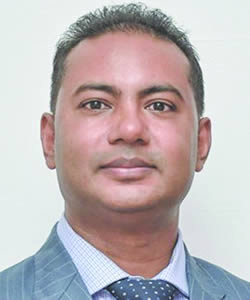
This demographic transition, underlines Dr Jugurnath, places significant pressure on public finances, particularly on the Basic Retirement Pension (BRP).
He notes that the IMF projects Mauritius' old-age dependency ratio could double over the next three decades, leading to a substantial increase in pension expenditure if reforms are not introduced. Pension spending has already risen sharply, with BRP benefits having more than doubled since 2019.
However, he insists that this should not be interpreted as an argument against the welfare state itself.
“Sustainability does not necessarily require dismantling the welfare state. Rather, it requires adapting it to new realities. Several measures could help preserve the Mauritian social model:
Therefore, the answer is nuanced. The Mauritian welfare model remains socially desirable and politically important, but in its current form it is unlikely to be financially sustainable over the next twenty years without significant reforms,” explains Dr Jugurnath.
Among all areas of government expenditure, Dr Jugurnath believes two sectors will face particularly intense pressure over the coming decades: pensions and healthcare.
“The most significant fiscal challenge will be the Basic Retirement Pension. As life expectancy increases and the number of retirees grows, pension expenditure is projected to rise much faster than government revenues,” he states.
The demographic equation is straightforward but worrying. “With fewer workers contributing taxes and more retirees receiving benefits, pensions will account for an increasingly large share of public spending.”
Healthcare, he adds, will become the second major financial challenge. “Older populations require more frequent and costly medical care, particularly for chronic diseases such as diabetes, cardiovascular illnesses, cancer, and dementia,” he underlines.
As a result, Mauritius is likely to experience growing demand for hospitals, specialised treatments, long-term care facilities and healthcare professionals.
Other areas are also expected to come under pressure, including long-term elderly care, disability support and dependency benefits. If public expenditure continues to rise faster than revenues, increased borrowing could also place additional strain on public debt.
The debate surrounding pension reform often generates strong emotions. However, Dr Jugurnath believes the discussion should be framed around long-term sustainability rather than political ideology.
“Mauritius has every reason to be proud of its pension system. For decades, the Basic Retirement Pension has been one of the pillars of our social contract, helping to reduce poverty among the elderly and ensuring that those who have contributed to the country's development can retire with dignity.”
Yet demographic realities are changing rapidly. “We are living longer, birth rates are declining, and the number of retirees is growing much faster than the number of workers supporting the system through taxes and economic activity.”
For this reason, he believes reform has become unavoidable. “Pension reform is not a question of ideology; it is a question of sustainability. If we fail to act today, future generations may face a situation where pension costs crowd out spending on healthcare, education, infrastructure, and other essential public services,” warns Dr Jugurnath.
Rather than advocating drastic changes, Dr Jugurnath supports a gradual and balanced approach.
Among the reforms he proposes are progressively aligning the retirement age with increases in life expectancy, encouraging people who remain healthy to stay economically active for longer, strengthening occupational and private pension schemes, and exploring ways to better target public support while ensuring vulnerable elderly citizens remain fully protected.
“There is a legitimate debate about whether the same level of support should be provided to wealthy retirees and to those who depend entirely on the pension for their survival,” he says. “Any reform, however, must guarantee that vulnerable elderly citizens remain fully protected.”
Dr Jugurnath believes that ageing should not be viewed solely through the lens of government expenditure. “An ageing population is not only a social challenge; it is also an economic challenge.”
A shrinking labour force, he explains, could slow economic growth across several sectors. “With fewer young people entering the labour market and a growing number of retirees, Mauritius could face labour shortages in key sectors such as healthcare, construction, manufacturing, tourism and emerging digital industries.”
A smaller workforce also means lower economic potential unless productivity improves significantly. “The priority must therefore be to transform Mauritius from a labour-dependent economy into a productivity-driven economy through digitalisation, artificial intelligence, research and development, and better human capital,” he declares.
Ageing will also affect government revenues. “A smaller working-age population may mean slower growth in income tax, social contributions and consumption-related taxes. At the same time, government expenditure on pensions, healthcare and elderly support will continue to increase.”
This creates what he describes as a double challenge: slower revenue growth alongside rising social spending.
Despite these concerns, Dr Jugurnath does not believe population ageing should be viewed exclusively as a burden. “Ageing should not only be seen as a constraint. It also creates opportunities,” he asserts.
He points to the emergence of a “silver economy”, encompassing healthcare services, elderly care, wellness, assisted living and specialised financial products, as an area capable of generating new economic activity and employment.
He also believes older Mauritians who wish to remain professionally active should be encouraged to do so. “Encouraging older persons who wish to remain active to continue working can help preserve skills and increase economic participation.”
Looking ahead, Dr Jugurnath believes Mauritius still has time to prepare—but that window will not remain open indefinitely. “The demographic transition we are experiencing is not a distant challenge; it is a structural change that will shape the future of our economy,” he affirms.
Without timely reforms, he warns, Mauritius could face slower economic growth, labour shortages, mounting pressure on public finances and deteriorating fiscal sustainability.
“Higher social expenditure combined with slower revenue growth could lead to rising public debt or increased taxation. This could reduce the government's ability to respond to future economic shocks and may affect investor confidence.”
Yet he remains optimistic that the country can successfully adapt if reforms are introduced progressively. “By reforming pensions gradually, increasing productivity, encouraging labour-force participation, attracting talent, supporting entrepreneurship and investing in new growth sectors, Mauritius can turn demographic ageing into an opportunity,” he avers.
Ultimately, he believes the country faces a defining choice. “We can either manage ageing today through planned reforms, or face much more difficult adjustments tomorrow. The objective is not simply to reduce future costs; it is to build an economy that remains prosperous, competitive and socially fair for the next generation,” says Dr Jugurnath.
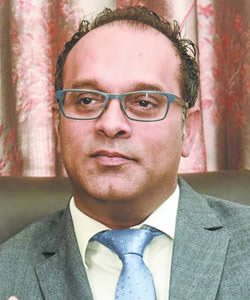
As Mauritius’ population continues to age, the impact will extend far beyond public finances. For businesses, the demographic shift is expected to reshape recruitment, workforce planning, productivity and the way organisations manage talent.
According to Preetam Seewoochurn, Consultant and Specialist in the Tourism Sector, Human Resources and Management, the country’s greatest challenge will not simply be replacing retiring employees, but preserving the invaluable knowledge and experience they take with them.
“The biggest challenge is that employers are losing experienced workers faster than they can replace them. Many employees who are approaching retirement have accumulated decades of technical expertise, institutional knowledge and leadership experience. When they leave, organizations do not simply lose a worker, they lose valuable know-how that is often difficult to transfer,” he explains.
The problem is compounded by Mauritius’ changing demographics. “At the same time, Mauritius is seeing slower growth in its working-age population. This means there are fewer young people entering the labour market to replace those retiring.”
To prevent a widening skills gap, Seewoochurn believes organisations must begin preparing long before employees reach retirement. “Employers will therefore need to place greater emphasis on succession planning, mentoring programmes and continuous skills development to ensure that knowledge is passed on to the next generation of workers.”
Labour shortages could become one of Mauritius’ biggest economic challenges
Several industries are already struggling to recruit and retain employees, but Preetam Seewoochurn believes the situation is likely to intensify.
“Labour shortages are likely to become one of the defining economic challenges of the next two decades. Several sectors, including healthcare, tourism, construction, manufacturing and ICT, are already struggling to recruit and retain workers.”
As the population ages, he underlines, the gap between labour demand and labour supply could widen considerably. The consequences, he warns, could be felt throughout the economy.
“Fewer people of working age will be available to support a growing number of retirees.”
Without timely action, businesses may encounter higher recruitment costs, slower expansion and mounting pressure to increase productivity. “The issue is not only about numbers,” he stresses. “It is also about ensuring that workers possess the skills required in an increasingly digital and knowledge-based economy.”
Older workers should be seen as an asset
With Mauritians living longer and remaining healthier later in life, Preetam Seewoochurn believes encouraging older people to remain economically active should form part of the country’s response to demographic ageing.
“I believe Mauritius should encourage those who are willing and able to remain economically active beyond the traditional retirement age.”
He argues that many experienced professionals still have significant value to offer employers. “People are living longer; healthier lives and many older workers still have valuable contributions to make.”
However, extending careers should not simply mean asking employees to remain in the same positions under unchanged working conditions. “Employers will need to offer more flexibility through part-time work, flexible schedules and phased retirement options,” he utters.
Continuous learning will also become increasingly important as technology transforms workplaces. “Workplaces should also invest in continuous learning so that older employees can keep pace with technological change.”
Perhaps most importantly, Seewoochurn believes organisations must rethink their perception of age. “Organisations must move away from outdated assumptions about age and recognise the experience, reliability and mentoring capacity that older workers bring.”
Technology can help—but it is not the complete answer
Artificial intelligence and automation are often presented as solutions to labour shortages. While Preetam Seewoochurn believes these technologies will play an important role, he cautions against viewing them as a cure-all.
“Technology will certainly help, but it is not a silver bullet. Automation and artificial intelligence can improve productivity, reduce repetitive tasks and allow businesses to do more with fewer workers.”
In sectors facing acute labour shortages, he asserts, these technologies will become increasingly important.
Yet technology cannot replace every aspect of human work. “Many roles require creativity, empathy, judgment and interpersonal skills,” he underlines.
Instead, Preetam Seewoochurn believes Mauritius should pursue a balanced strategy that combines technological innovation with stronger labour-force participation. “The most effective strategy will be a combination of technology adoption and stronger workforce participation. Encouraging more women, older individuals and underrepresented groups to enter or remain in the workforce will be just as important as investing in automation.”
Preparing today for tomorrow’s workforce
For Preetam Seewoochurn, one message stands out above all others: Mauritius still has time to prepare—but action cannot be delayed. “The time to prepare is now,” he declares.
Unlike many economic shocks, demographic change is predictable. “Demographic trends are highly predictable, which means we know what is coming and have an opportunity to act before the challenges become more severe.”
He believes government should prioritise education, lifelong learning and skills development while implementing policies that encourage greater labour-force participation.
“Policies that support workforce participation, such as affordable childcare, flexible work arrangements and targeted training programmes, can help maximise the country’s human capital.”
He also suggests that Mauritius may need to reassess its approach to attracting and retaining skilled foreign professionals in sectors experiencing critical shortages.
For businesses, he says, the focus should be on long-term workforce planning rather than short-term recruitment. “Companies need to identify future skill requirements, invest in employee development and create workplaces that are inclusive of all age groups.”
Ultimately, Preetam Seewoochurn believes organisations that successfully combine talent development, innovation and technology will be best positioned to thrive in an ageing society.
“Those that successfully combine talent development, innovation and technology will be best positioned to thrive in an ageing society,” he affirms.

Mauritius’ ageing population will not only reshape the country’s economy and labour market—it will also transform its healthcare needs. As more Mauritians live longer, the demand for long-term care, chronic disease management and community health services is expected to rise significantly.
For Dr Joy Ah Min, General Practitioner, the demographic transition is already underway and requires long-term planning rather than reactive measures. “Mauritius is on track to become a hyper-aged society, with people aged over 60 projected to represent more than one-third of the population by 2061,” she says.
One of the biggest consequences, she explains, will be the growing number of people living with chronic illnesses.
“We are likely to see a surge in non-communicable diseases such as type 2 diabetes, hypertension, degenerative illnesses and arthritis, all of which require long-term and specialised management.”
At the same time, ageing will bring new challenges linked to cognitive health. “We can also expect rising rates of dementia and cognitive decline, which will require expanded specialised clinics, psychiatric services and memory care infrastructure,” she explains.
Preparing the healthcare system
As the elderly population grows, Dr Joy Ah Min believes Mauritius must continue strengthening its healthcare system to avoid placing excessive pressure on hospitals.
“To prevent overwhelming hospitals, Mauritius has already developed the National Integrated Care for Older People (ICOPE) Strategic and Action Plan 2022-2026 in collaboration with the World Health Organization and several national stakeholders.”
She explains that the strategy promotes a more integrated and person-centred model of care as per the World Health Organisation (WHO) recommendation, bringing together healthcare and social services to better meet the needs of older people.
“The objective is to facilitate continuous collaboration between healthcare providers, ensure early screening for declines in physical and mental capacity, and develop personalised care plans with multidisciplinary teams.”
According to Dr Ah Min, this integrated approach also allows for better monitoring and follow-up, helping older people remain healthier and more independent for longer.
Prevention is the best investment
For Dr Ah Min, preparing for an ageing population begins well before old age. “As people live longer, preventive healthcare becomes one of the most effective ways of reducing pressure on hospitals while allowing older Mauritians to remain active and independent.”
She points out that non-communicable diseases account for the overwhelming majority of deaths in Mauritius.
“Conditions such as diabetes and cardiovascular diseases are responsible for up to 85% of mortality in Mauritius. Managing these conditions proactively through regular community-based screening keep older adults out of regional hospital emergency wards.”
She also believes healthy ageing goes beyond medical treatment. “We need to encourage more activities that promote mobility, vitality and overall well-being among older people,” she utters.
Dr Ah Min stresses that integrated care strategies, including the ICOPE Action Plan, play an important role in promoting healthy ageing through prevention, early intervention and coordinated healthcare.
The country’s changing family structure also presents new challenges. “With the shift towards smaller, nuclear families, fewer younger relatives are available to provide the traditional support that older people once relied upon,” she says.
Helping seniors maintain their physical and functional independence therefore benefits not only the individuals themselves but also their families.
“Maintaining the functional health of older persons helps prevent premature institutionalisation and reduces pressure on both families and long-term care facilities.”
Building communities that support healthy ageing
Looking ahead, Dr Joy Ah Min believes Mauritius should prioritise strengthening community care alongside healthcare services. “The highest priority should be expanding community care.”
She advocates for more day-care centres for older people as well. “This means expanding day-care facilities, scaling mobile health teams, and strengthening support for family caregivers,” she says.
Dr Ah Min also underlines that combating social isolation is equally important. “Expanding social programmes and daytime activity centres can reduce loneliness while promoting both physical and mental well-being. Currently we have 22 elderly day care centres across the island,” she explains.
On the public health front, she believes preventive action must remain at the centre of national policy.
“The Ministry of Health and Wellness is already carrying out early screening and nationwide campaigns to prevent non-communicable diseases, and these efforts will become even more important as the population ages.”
She also highlights the importance of preparing the health sector for future climate-related health risks.
“Policies integrating weather-disease monitoring and emergency response systems are becoming increasingly important for public health preparedness.”
Investing today for tomorrow
Dr Ah Min believes the country should continue implementing the National Integrated Care for Older People Strategic Plan while embracing digital healthcare solutions.
“Full implementation of the ICOPE Strategic Plan remains essential. This includes training the healthcare workforce, expanding specialised dementia clinics and developing personalised care plans,” she asserts.
She also welcomes the move towards E-Health system integration. “The Ministry of Social Integration, Social Security, National Solidarity is already working on shifting to E-Health such as electronic health records and digital social security systems to ensure seamless continuity of care as elderly individuals navigate different healthcare points.”
For Dr Ah Min, preparing for an ageing society is not simply about treating more illnesses—it is about helping Mauritians remain healthier, more active and independent throughout later life.
 J'aime